
Oyu Tolgoi, from Gobi plain to copper mine, 1986 to 2025
For most of these forty years nothing happens here: the Gobi plain, dry stream beds and a few tracks. Then, from 2010, a mine appears almost at once: an open pit, a concentrator, a camp, and a tailings dam that ends up larger than everything else in the picture. Underneath, shafts about 1.3 km deep lead to the block cave that now carries the mine.
Forty years, frame by frame
One clear picture every five years, all on one grid, 15 km across. Pick a frame to open the viewer on it, drag the timeline, or press Play. Compare puts any two years side by side under a divider you drag.
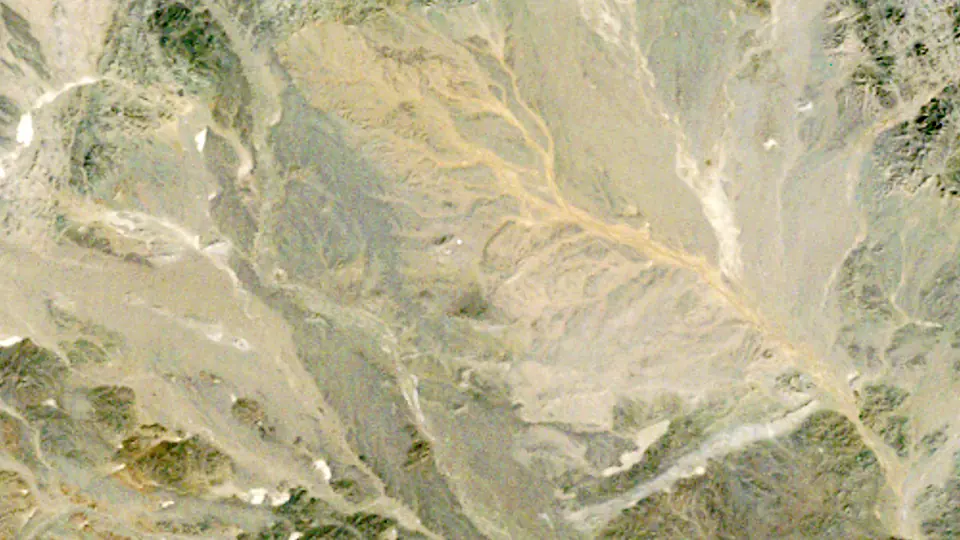 1985 · 13 Dec 1986
Landsat 5
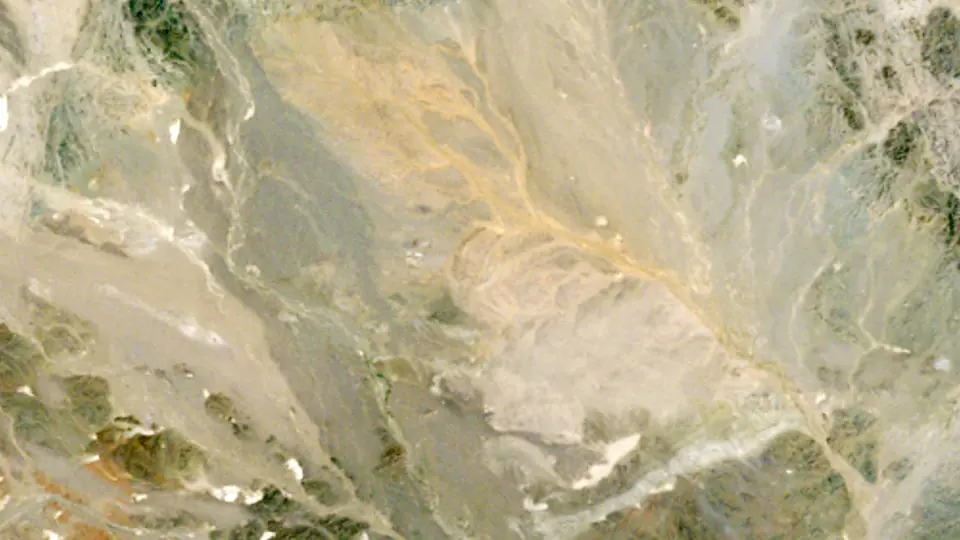 1990 · 21 Aug 1991
Landsat 5
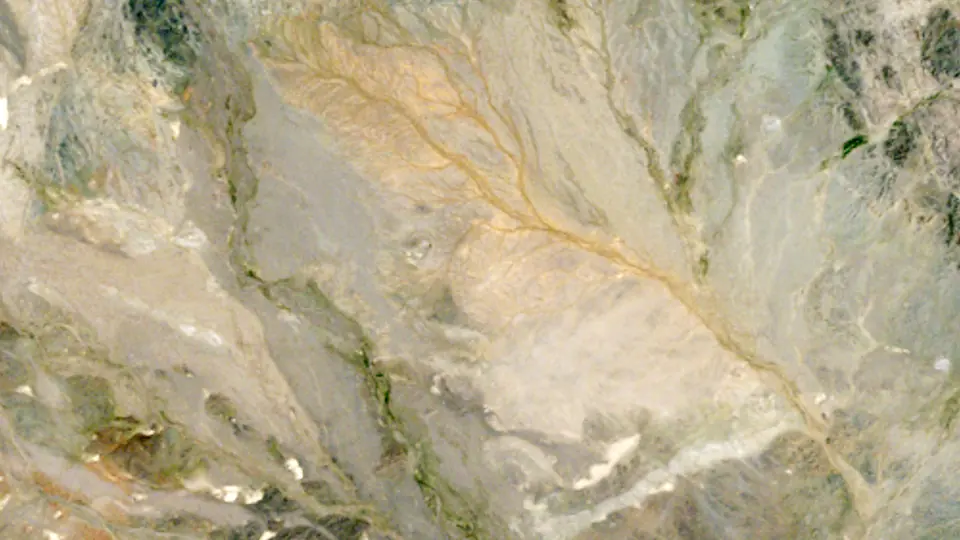 1995 · 2 Aug 1996
Landsat 5
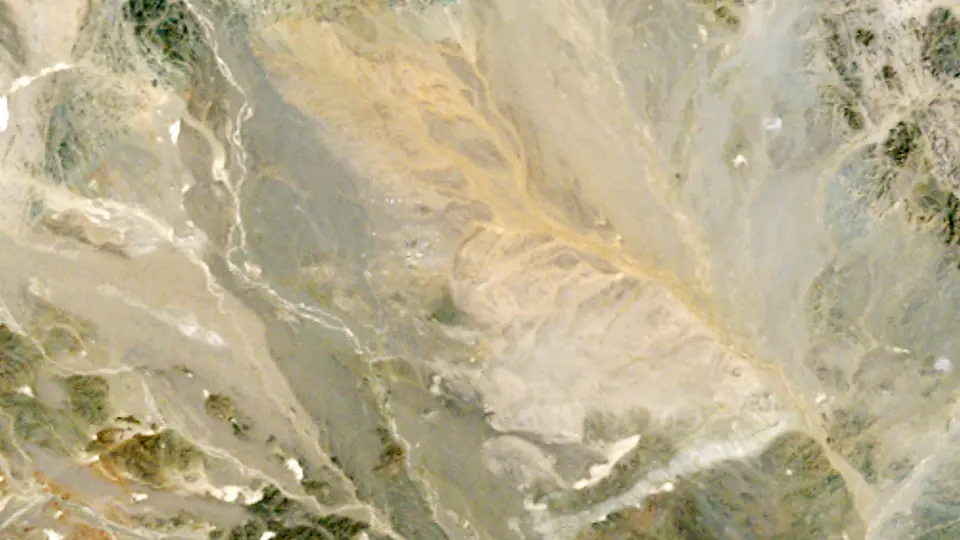 2000 · 29 Aug 2000
Landsat 5
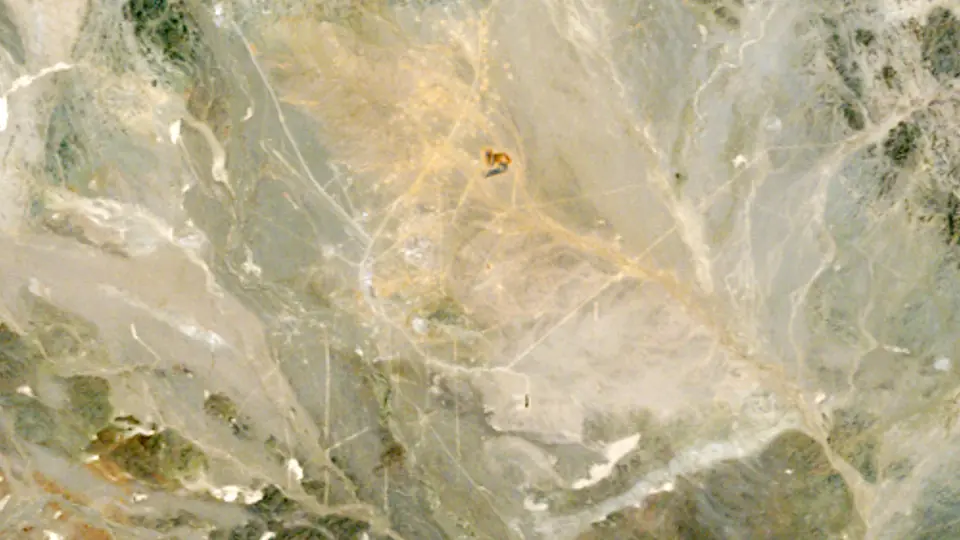 2005 · 8 Aug 2004
Landsat 5
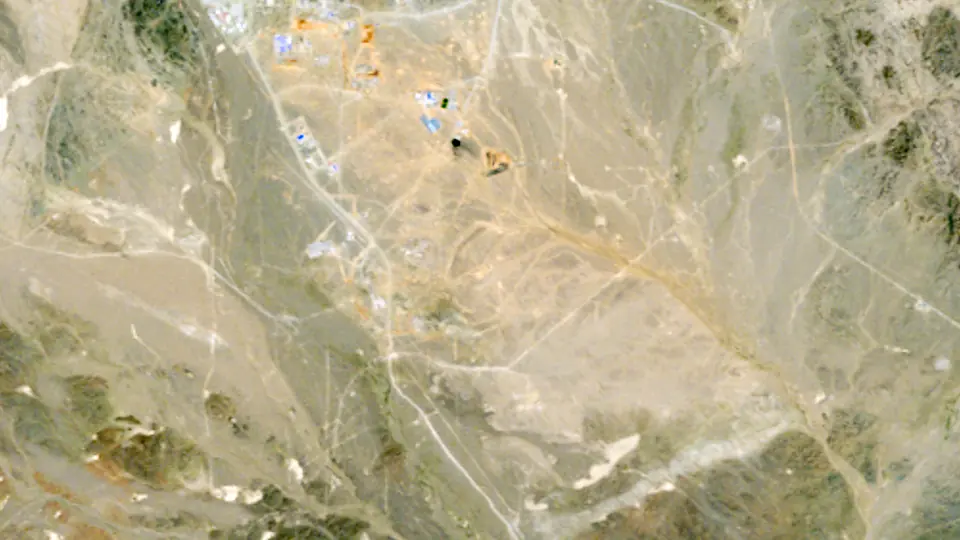 2010 · 9 Aug 2010
Landsat 5
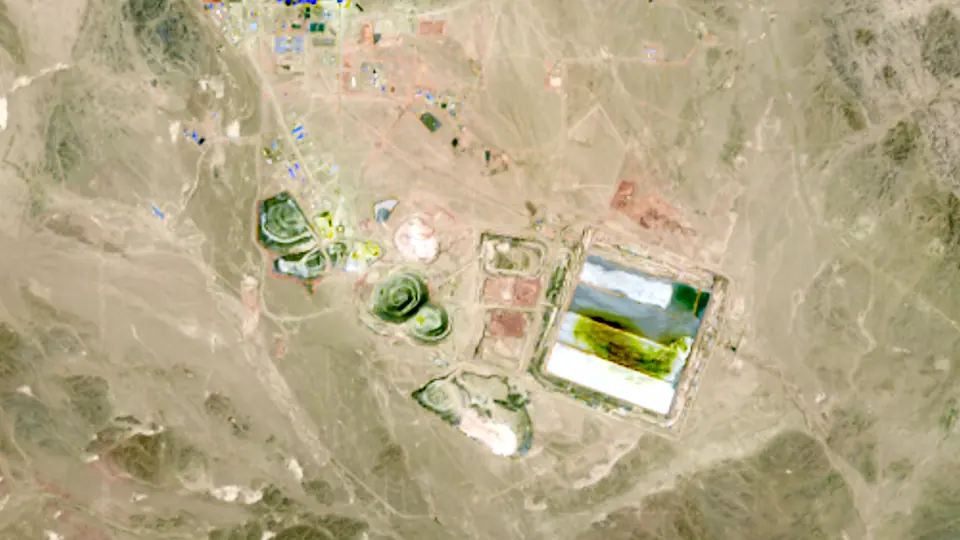 2015 · 9 Aug 2016
Landsat 8
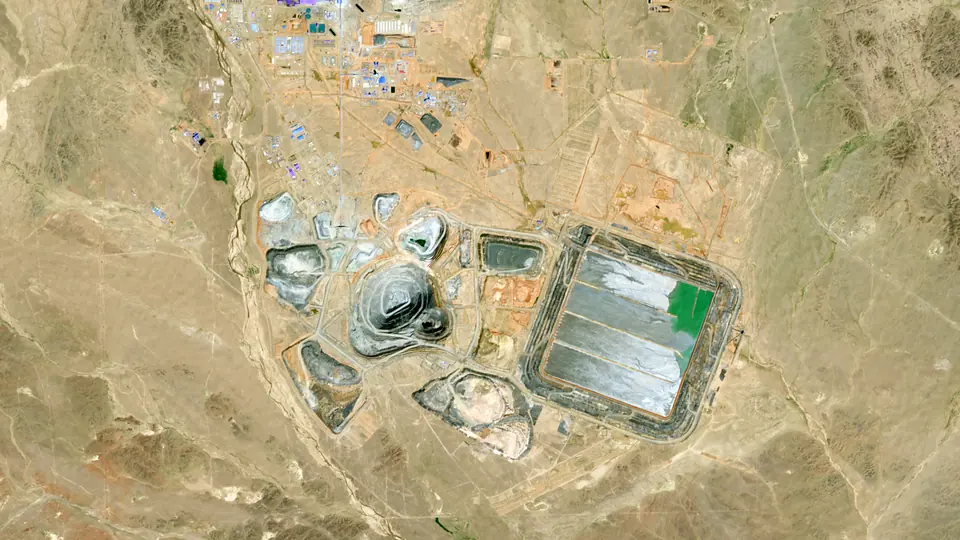 2020 · 22 Aug 2021
Sentinel-2B
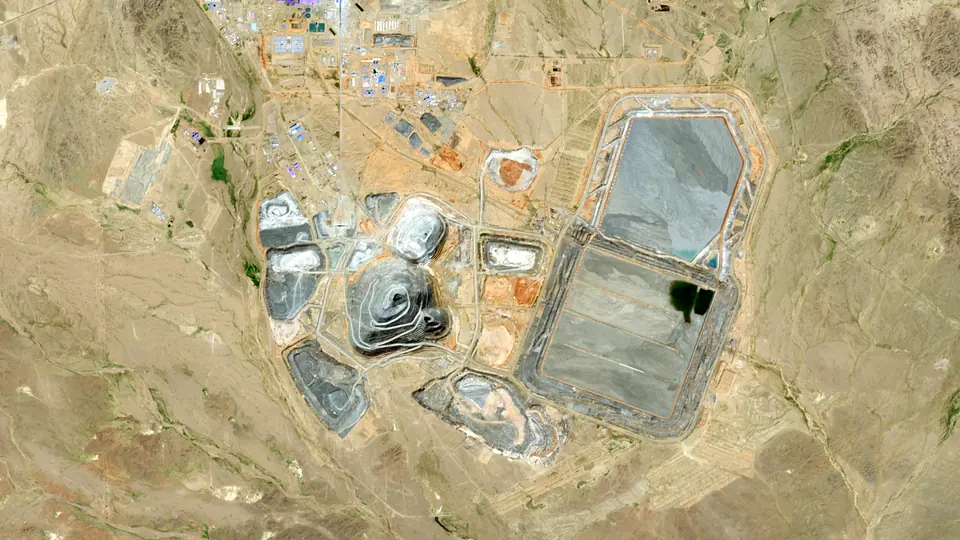 2025 · 21 Aug 2025
Sentinel-2B
What happened here
- 2011 Open-pit mining starts. Oyu Tolgoi began open-pit mining in 2011, with the concentrator running in 2013. [1][2]
- 2023 Underground at full stretch. Underground mining, through shafts about 1.3 km deep, reached sustainable production in March 2023. [1]
- 2025 345 kt of copper. Rio Tinto reports 345 kt of copper in concentrate from Oyu Tolgoi in 2025, on a 100 per cent basis, and expects about 500 kt a year from 2028 to 2036. [2]
More on the mine's history is on Oyu Tolgoi in the history of mining, and on the copper and gold pages and mining in Mongolia.
Copper output by year
Copper output from Oyu Tolgoi in the years with an open, mine-level figure: the Jasansky et al. open database of mine production (CC BY 4.0) and the operators' own filings. Years with no open mine-level figure are left out rather than estimated. The timeline under the pictures shows the same bars.
The figures
| Year | Output | Basis | Source |
|---|---|---|---|
| 2014 | 148 kt | contained copper | [3] |
| 2015 | 202 kt | contained copper | [3] |
| 2016 | 201 kt | contained copper | [3] |
| 2017 | 157 kt | contained copper | [3] |
| 2018 | 159 kt | contained copper | [3] |
| 2025 | 345 kt | Cu in concentrate, 100% basis | [2] |
Photos
Pictures from the ground and from orbit, openly licensed. The viewer slips each one in near its year.
How this was made
Pictures. Landsat 4 and 5 (to 2011), Landsat 7 (before its 2003 scan-line fault), Landsat 8 and Sentinel-2 (2017 on), surface reflectance read from Microsoft's Planetary Computer. For each frame we take the clearest picture within a year or so of the target year, in the same season where we can, checked against each scene's own cloud mask, and cut it to one grid. One colour stretch serves every frame, and each older frame is colour-matched to the newest over the whole picture, so a change in colour is mostly a change on the ground. Landsat pixels are 30 m and Sentinel-2 pixels 10 m, so the newest frames are sharper. The date of each picture shows under the year.
The bare desert defeats our automatic mapping of worked ground, so this district has no outline layer; the pictures show the change. The 1986 picture is from December, so its colours are cooler than the summer frames.
Output and milestones. Each figure and fact is linked to its source below. We report what operators and governments published and do not estimate missing years.
Sources and credits
- Rio Tinto: Oyu Tolgoi operation page
- Rio Tinto (SEC): Form 20-F for the year ended 31 December 2025
- Jasansky, Brauneis, Maus et al. (Vienna University of Economics and Business): Open database on global coal and metal mine production (Zenodo v1.0.3; paper: Scientific Data 2023)
Satellite pictures: USGS/NASA Landsat (public domain) and contains modified Copernicus Sentinel-2 data 2025, via Microsoft Planetary Computer, processed by Prospector Trails. Photos: Ore, 2010: Brücke-Osteuropa, Wikimedia Commons, Public domain; Camp, 2010: Brücke-Osteuropa, Wikimedia Commons, Public domain. Not investment advice.


More time machines
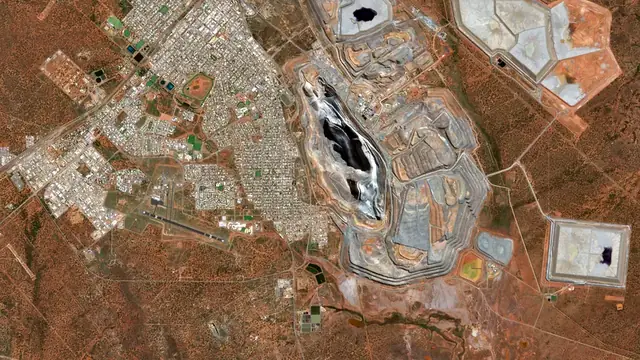
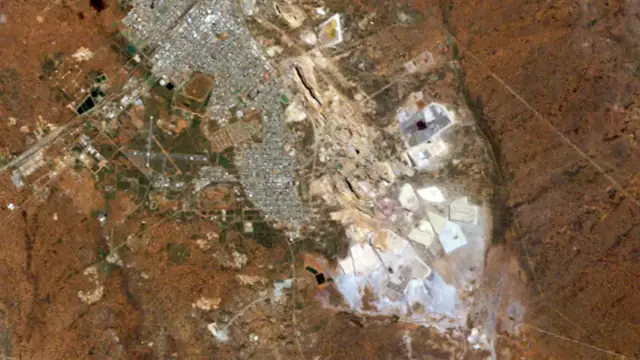 20251986Kalgoorlie Super PitThe Golden Mile's old leases become one open pit, 3.5 km long.1986 to 2025 · Australia
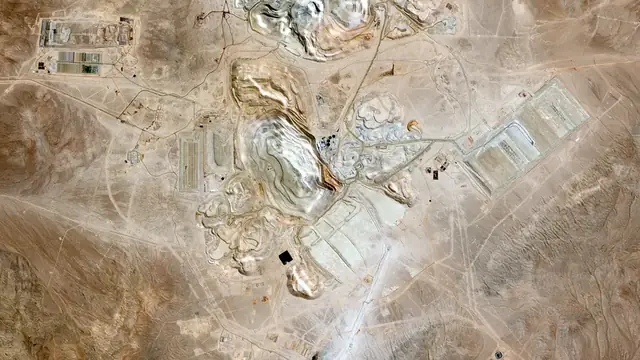
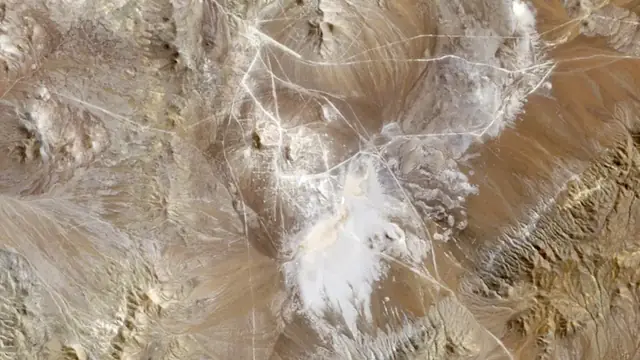 20251986EscondidaFrom an empty Atacama valley to the world's biggest copper mine.1986 to 2025 · Chile
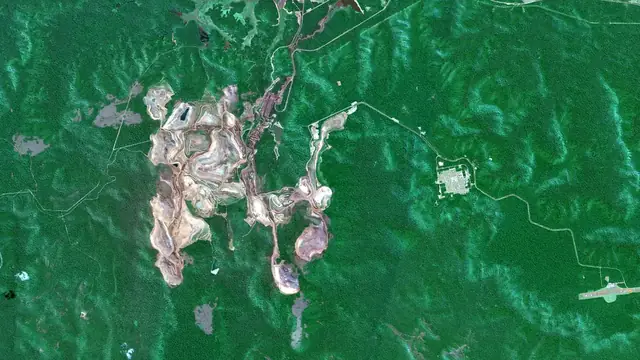
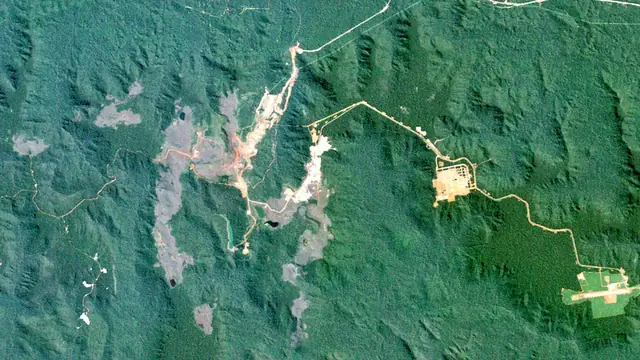 20251984CarajásRed iron pits open into the Amazon forest from 1984.1984 to 2025 · Brazil
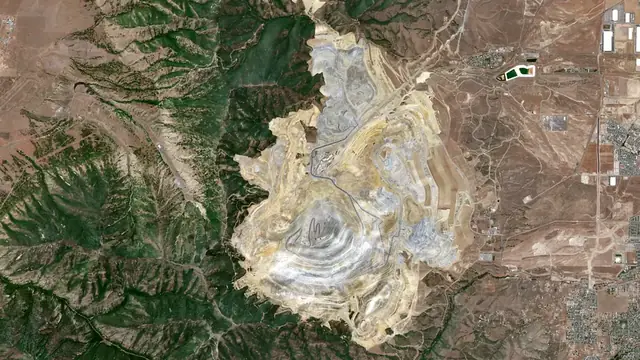
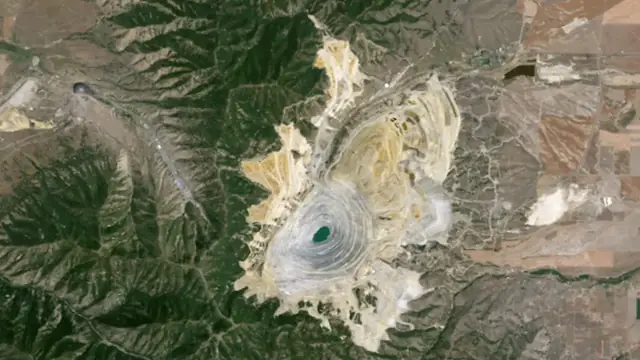 20261986Bingham CanyonMined since 1903 and still widening.1986 to 2026 · United States
Keep exploring
Keep exploring


All mining storiesThe world runs on rockAll mineralsMining by country
Pictures: Escondida Mine, Chile, NASA/GSFC/METI/ERSDAC/JAROS, and U.S./Japan ASTER Science Team (Public domain (NASA media, no copyright)); Elektrisk malmletning. Undersökningar på Billiton, 1920., Okänd / Europeana (Public Domain Mark 1.0).