
The world runs on rock · Story 6 of 12
The Signal light in glass, under the sea
Send a message to another continent and it almost certainly travels as flashes of light through glass threads on the sea floor. Those threads are spun from quartz and spiked with germanium, wrapped in steel and copper, and laid by ship across every ocean.
Scroll to strip a cable
Take it apart
As thick as a garden hose
In early 2025 there were about 570 subsea cable systems in service, with 81 more planned.1 In deep water a cable is about as thick as a garden hose; near shore, where anchors and trawlers drag, it gets coats of steel armour.
Layer by layer
- Jacket polyethylene
- Armour wires galvanised steel, in shallow water
- Copper sheath carries power out to the repeaters
- Strength wires steel, so the cable can be lowered kilometres deep
- Tube filled with gel to keep water off the glass
- Fibres a handful of pairs of glass threads
Repeaters
Rare earths on the sea floor
Light fades as it travels, so every 60 km or so a repeater boosts it. Inside are lengths of fibre doped with erbium, a rare earth, that amplify the light directly. Power reaches them through the cable's copper, fed from the shore.2
SiGeErCuFeZnGa

A narrow door
Europe to Asia, through Egypt
Many of the cables between Europe and Asia cross Egypt and run the length of the Red Sea, a few hundred kilometres wide, before fanning out across the Indian Ocean.3
One fibre
Light that can't get out
A fibre is a thread of glass thinner than a hair, with a core inside a cladding. Light sent down the core hits the boundary at a shallow angle and bounces back in, again and again, for thousands of kilometres.
The trick
A pinch of germanium
The light stays in because the core bends light slightly more than the cladding. That is done by adding a little germanium dioxide to the core's pure silica, which raises its refractive index without absorbing the light.4
Where germanium goes
Fibre optics is the largest use of germanium in the United States, ahead of infrared optics, electronics and solar cells.5 Most of it is recovered as a by-product of zinc ores and coal ash.
The last mile
Then into the air
At the end of the glass, the signal often finishes its trip by radio. Many 5G base stations use amplifiers made of gallium nitride, which handle more power in less space than older silicon parts.6
The crystal
Gallium and nitrogen click together into a hexagonal crystal, grown layer by layer on a wafer. The same material is in fast phone chargers and in radar.
Follow the light
1 · The cables
About 570 systems in service, from short links between islands to cables tens of thousands of kilometres long. A few of the main routes are drawn here.1
2 · Germanium
China produced 68% of the world's refined germanium in 2021, the latest year with a country breakdown.5
3 · Gallium
And 99% of the world's primary gallium in 2025.5 In August 2023 China put both metals under export licences; in December 2024 it banned their export to the US, a ban suspended in November 2025 until November 2026.7,8
February 2024
4 · An anchor in the Red Sea
The cargo ship Rubymar, hit in a Houthi missile attack, drifted for about two weeks before it sank. US officials said its dragging anchor most likely cut three cables, Seacom, AAE-1 and EIG. Hong Kong's HGC estimated they carried about 25% of the traffic in the region.9
September 2025
5 · And again
More cuts in the Red Sea slowed internet traffic between Asia, the Middle East and Europe. Microsoft warned Azure customers of higher latency as traffic was rerouted, and said undersea repairs "can take time".10

Repairs
A ship, a grapnel, and time
A cut cable is fixed by a repair ship that hauls the broken ends to the surface and splices in new cable. In a war zone, operators must also arrange security and insurance for the crews before the work can start.9
Why "critical"
Thin glass, thick dependence
The cable itself is mostly common materials: sand-made glass, steel, copper and plastic. The rare parts are small: germanium in every core, erbium in every repeater, gallium in the radios at the end. Each comes mostly from one country.
Next in the series: The Shield, defence and its minor metals. Before this: The Rocket, The Magnet, The Battery, The Mind and The Chip.
Sources
Shares of world output are from USGS Mineral Commodity Summaries 2026 via our minerals data; other figures are cited where they appear. The cable and fibre are illustrations, not to scale; the routes on the globe are a sample, not a map of every cable. Photos: NASA, public domain.
- TeleGeography: how many submarine cables are there, anyway? (February 2025)
- US patent 9893834: locally powered optical communication network (repeater spans, EDFAs, shore power feed)
- Data Center Knowledge: Houthi-sunk ship seen as likely cause of severed Red Sea cables
- USGS Minerals Yearbook 2020: germanium (dopant in optical fibre cores)
- USGS Mineral Commodity Summaries 2026: germanium (and gallium)
- Mitsubishi Electric: GaN power amplifier module for 5G massive MIMO base stations (March 2025)
- Mining.com: China bans export of gallium, germanium and antimony to the US (December 2024)
- Fastmarkets: China suspends export prohibition to the US (November 2025)
- gCaptain / AP: Rubymar's anchor seen as likely cause of severed Red Sea cables (March 2024)
- TechCrunch: Microsoft says Azure affected after cables cut in the Red Sea (September 2025)
Keep exploring
Read next
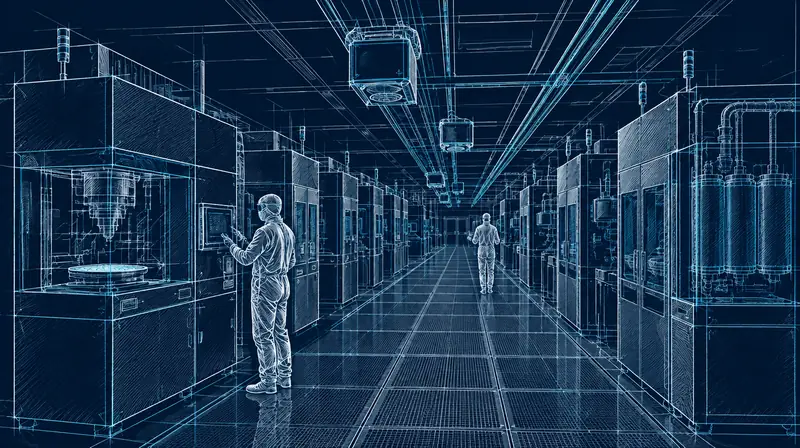 The world runs on rockThe ChipThe minerals inside every computer chip
 The world runs on rockThe MindThe metal and power behind AI
 The world runs on rockThe ShieldThe minor metals defence depends on
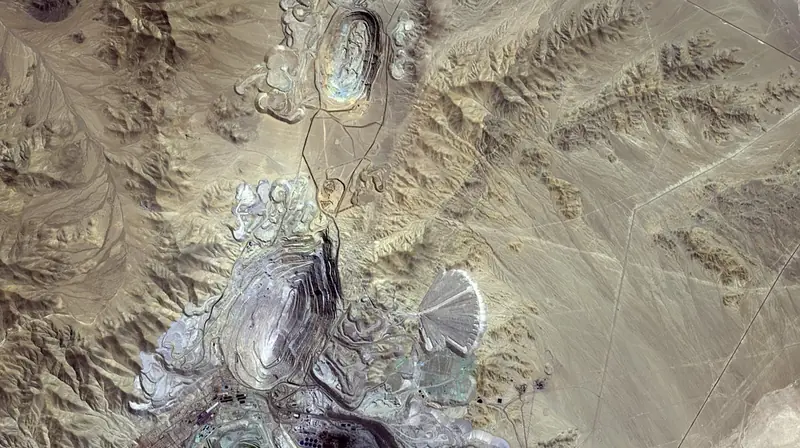 The world runs on rockThe GridCopper, the metal of electricity
All mining storiesThe world runs on rockAll mineralsMining by country