
Events/Discovery · 1564
Mercury mining begins at Huancavelica
Discovery, 1564 (some sources say 1563), Peru.
What happened
Colonial cinnabar mining and refining began at Huancavelica in 1564. Robins and Hagan estimate that between 1564 and 1810 about 17,000 t of mercury vapour was emitted from smelting there.1,2
Why it matters
Mercury from Huancavelica made silver refining at Potosi possible and so fed the Spanish silver trade.1,2
Story cards
Around the same time
- Spaniards find silver at Cerro Rico, Potosi
UNESCO dates the Spanish discovery of Cerro Rico to 1545.3
- A large silver vein is found at Zacatecas
The 1546 find at Zacatecas started the silver road to Mexico City.4,5
- Zacatecas is founded by four Spanish partners
Oñate, Tolosa, Ibarra and Bañuelos founded the city, and Oñate became one of the richest men in New Spain.4,5
- El Camino de la Plata is opened to carry silver
The road from Zacatecas to Mexico City started to be developed in 1550, with forts against raids.4,6
- Legazpi reaches Cebu from Acapulco
Legazpi left Acapulco with five ships and founded the first Spanish settlement in the Philippines at Cebu.7,8
- Manila galleon trade begins
Manila galleon trade begins.9
- Mercury amalgamation adopted for Potosi silver
Amalgamation let miners treat poorer ore and drove the output of Potosi, at a high cost in health to the workers.1,10
- Manila becomes capital of the Spanish Philippines
Spain settled Manila in 1571, and it became its main trading port in East Asia.7,11
Where next
Sources
- Mercury Production and Use in Colonial Andean Silver Production: Emissions and Health Implications (via Europe PMC) Environmental Health Perspectives (Robins and Hagan)
- Huancavelica (item Q1000333), coordinate location P625 Wikidata
- City of Potosi added to List of World Heritage in Danger UNESCO World Heritage Centre
- History and Significance of El Camino Real de Tierra Adentro US National Park Service
- Wikidata item Q139242 (Zacatecas)
- Wikidata item Q1489 (Mexico City)
- Glasinovic Vernon J.P., Revisiting the Manila Galleon, a Chilean Perspective from the XXI Century Latin American Journal of Trade Policy 3 (Universidad de Chile)
- Wikidata item Q1467 (Cebu City)
- Wikidata item Q683846 (Manila galleon trade begins)
- Potosí (item Q35045), coordinate location P625 Wikidata
- Wikidata item Q1461 (Manila)
From the Prospector Trails mining history dataset: each fact links to the source it was checked against. Figures are as the source gives them, in the money of their day. Not investment advice.
Keep exploring
Stories with these minerals

 The world runs on rockThe GridCopper, the metal of electricity


All mining storiesThe world runs on rockAll mineralsMining by country
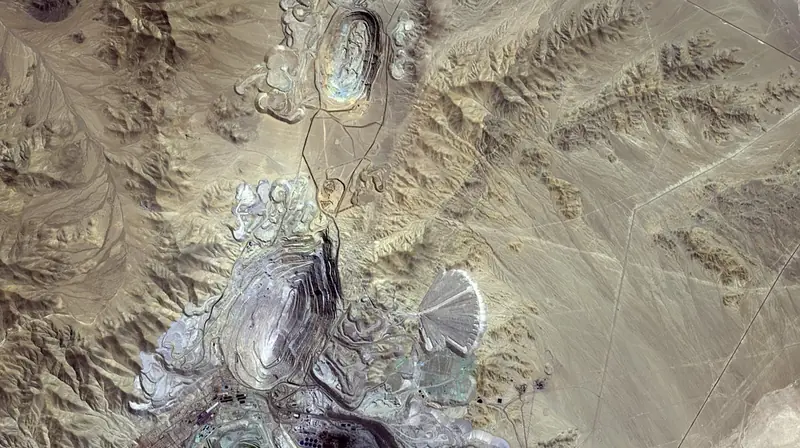
Cover photos from Wikimedia Commons: Cerro Rico over Potosí by Jbmurray, CC BY-SA 4.0. Pictures: Potosi, Bolivia, NASA/METI/AIST/Japan Space Systems, and U.S./Japan ASTER Science Team (Public domain (NASA media, no copyright)); South Africa: a crowd of people gathered outside The Goldfields offices in Johannesburg. 1896., Unknown (Wellcome Collection) (Public Domain Mark 1.0).