Medieval silver: Rammelsberg, Kutná Hora and Schwaz
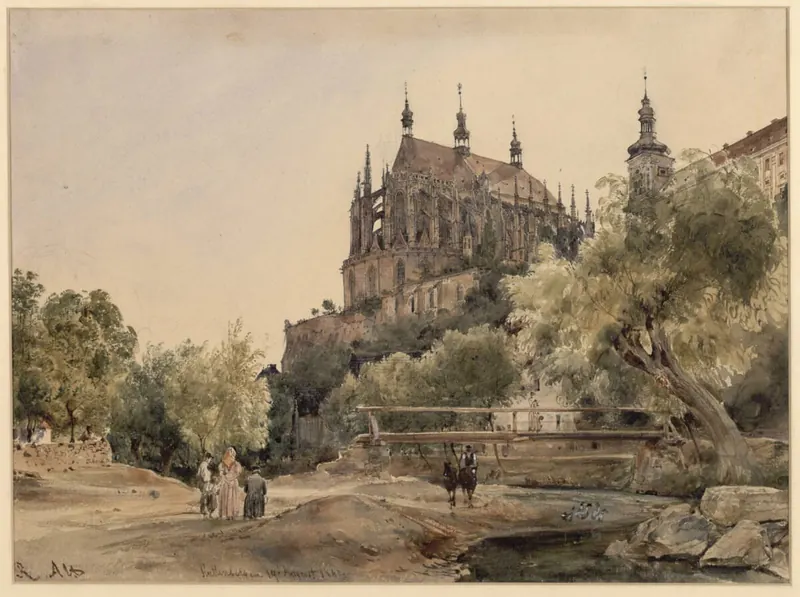
Die Barbarakirche in Kuttenberg, Europeana (Public Domain Mark 1.0)
Silver has been mined for a very long time. The Royal Society of Chemistry notes that slag heaps in Turkey and Greece show silver mining began around 3000 BC, and that Athens drew on the mines at Laurium from about 600 BC. We met Laurion in chapter 1.4
In medieval Europe, silver made towns and kings. ICOMOS says the Rammelsberg in the Harz mountains of Germany was mined for silver, copper, lead, zinc and gold from as early as the 3rd century BC. Its first written mention comes from the start of the 11th century. The rich silver ore was a main reason Henry II built an imperial residence nearby and held an imperial assembly there in 1009. The last mine at Rammelsberg closed in 1988.1
Further east, a whole town grew out of silver. ICOMOS says Kutná Hora, in today's Czech Republic, was founded in the early 1260s because of silver mining. Its mines ranked among the largest in the world in the Middle Ages. King Wenceslas II set up the royal mint at the Vlašský dvůr in 1300. The mines were worked out by the early 1540s.5
The church of St Barbara at Kutná Hora, shown here in an 1842 print, still stands over a town that silver built and silver left. The historic centre is a World Heritage Site.5
In the Tyrol, mining at Schwaz began about 1410, and the Falkenstein pits opened in 1420. About 12,000 miners worked there around 1500. Output peaked at 15.7 t of fine silver in 1523. Between 1500 and 1529 Schwaz produced about 346 t of silver and 22,400 t of copper.3,6
15.7 t fine silver
Peak year of output at Schwaz, Tyrol, 15233
Some old claims about Schwaz are hard to pin down. One Tirol source says it produced 85 percent of the world's silver. Another gives about 50,000 people in silver mining there by 1520. The sources conflict, so treat both with care.3,7
Silver also made bankers. From 1485 Jakob Fugger led his family's branch at Innsbruck. He lent money to Archduke Sigismund of Tyrol and took his repayment in cheap metal and mining privileges. The Fugger firm came to dominate Schwaz mining and the mint at Hall. From 1494 it moved into Hungarian mining too, centred on Neusohl.2

Potosí mines, Bolivia: the silver mountain
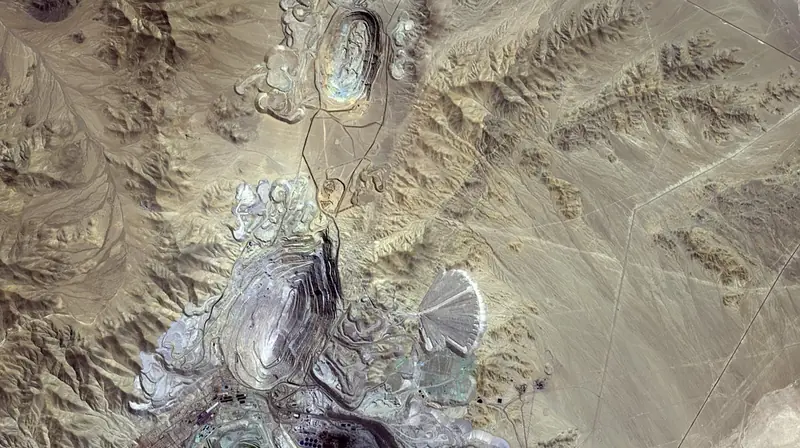
Potosi, Bolivia, NASA/METI/AIST/Japan Space Systems, and U.S./Japan ASTER Science Team (Public domain (NASA media, no copyright))
In 1545 the Spanish found silver at Cerro Rico, the rich hill above Potosí in the high Andes of what is now Bolivia. It became the most famous silver mine in history. We tell the full story of the mountain in our feature Potosí: the silver mountain. Here we follow what its silver did to the world.8,10
The numbers are vast for the time. Declared output peaked at 7.1 million ounces of silver in 1592. By 1650 about 450 million ounces had been registered at Potosí, about half the silver of Spanish America. The city passed 100,000 people by 1600 and reached about 160,000 in 1650.8,9
450 Moz silver
Registered at Potosí by 1650, about half the silver of Spanish America8
The wealth rested on forced labour. From 1573, Viceroy Toledo's mita sent about 13,000 to 13,400 Indigenous men a year to work the Potosí mines. The easy ore was largely worked out by about 1600. After that, the city lived on poorer ore and on a new chemistry that could treat it.8,9
Potosí was inscribed as a UNESCO World Heritage Site in 1987. It has been on the List of World Heritage in Danger since 2014. The city had 189,652 people in 2012. For mining in the country today, see mining in Bolivia.10,11


The patio process: mercury, salt and silver
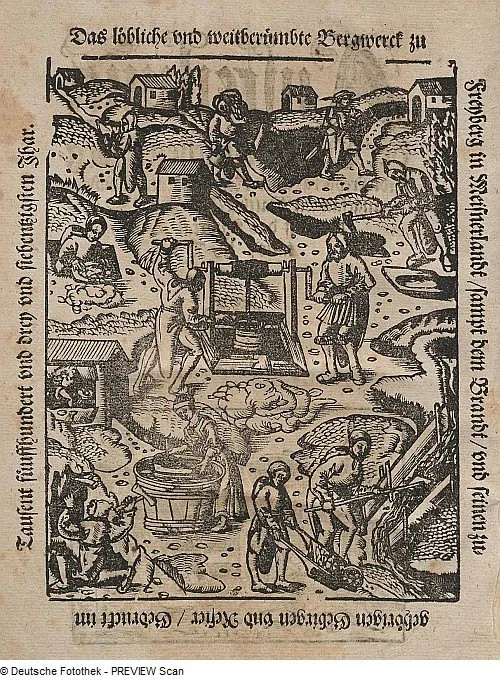
A silver mine: miners digging. Wood engraving., Unknown (Wellcome Collection) (Public Domain Mark 1.0)
The chemistry came from Mexico. Bartolomé de Medina, a Spanish businessman worried by falling silver yields, found that silver could be taken from ground ore with mercury and salt brine. In 1554 he set up a model patio refinery at Pachuca.12
In the patio process, ore was crushed to a slime and mixed with salt, water, a copper compound called magistral and mercury. Horses trampled the mix on an open patio until the silver bound to the mercury. It needed little wood or water, which were both scarce in the mining districts. It replaced smelting as the main way to win silver in Mexico and Peru.12
The Andes adopted mercury amalgamation in the early 1570s, using mercury from Huancavelica in Peru. It let miners treat the poorer ore left after the rich surface veins ran out, and it drove the output of Potosí. The cost fell on the workers. Robins and Hagan estimate that about 39,000 t of mercury was released as vapour in silver refining at Potosí.13
39,000 t mercury vapour
Released in Potosí silver refining (Robins and Hagan estimate)13
Mercury had to be mined too. Cinnabar mining and refining began at Huancavelica in 1564. Between 1570 and 1810 it produced about 50,600 to 51,300 t of mercury. About 17,000 t of mercury was emitted there from 1564 to 1810. The mita at Huancavelica was two months long, and the town never had more than 15,000 people.9
Getting the mercury to Potosí was its own feat of logistics. In 1574 Viceroy Toledo decided it would go by sea and land. It went down from Huancavelica to the coast at Chincha, by ship to Arica, and then up into the Andes to the Potosí refineries. The first Crown shipment in 1574 was 2,500 quintals, about 115 t. The land stage alone took at least 22 days.14
Small things could stop the whole system. In 1608 about 1,500 quintals of mercury sat in the warehouses at Arica because there were not enough hide bags to carry it.14
Spain had its own mercury mine at Almadén, worked since Roman times. It is said to have supplied about one third of all the mercury ever used by humans.15
Zacatecas silver mines and the Camino Real
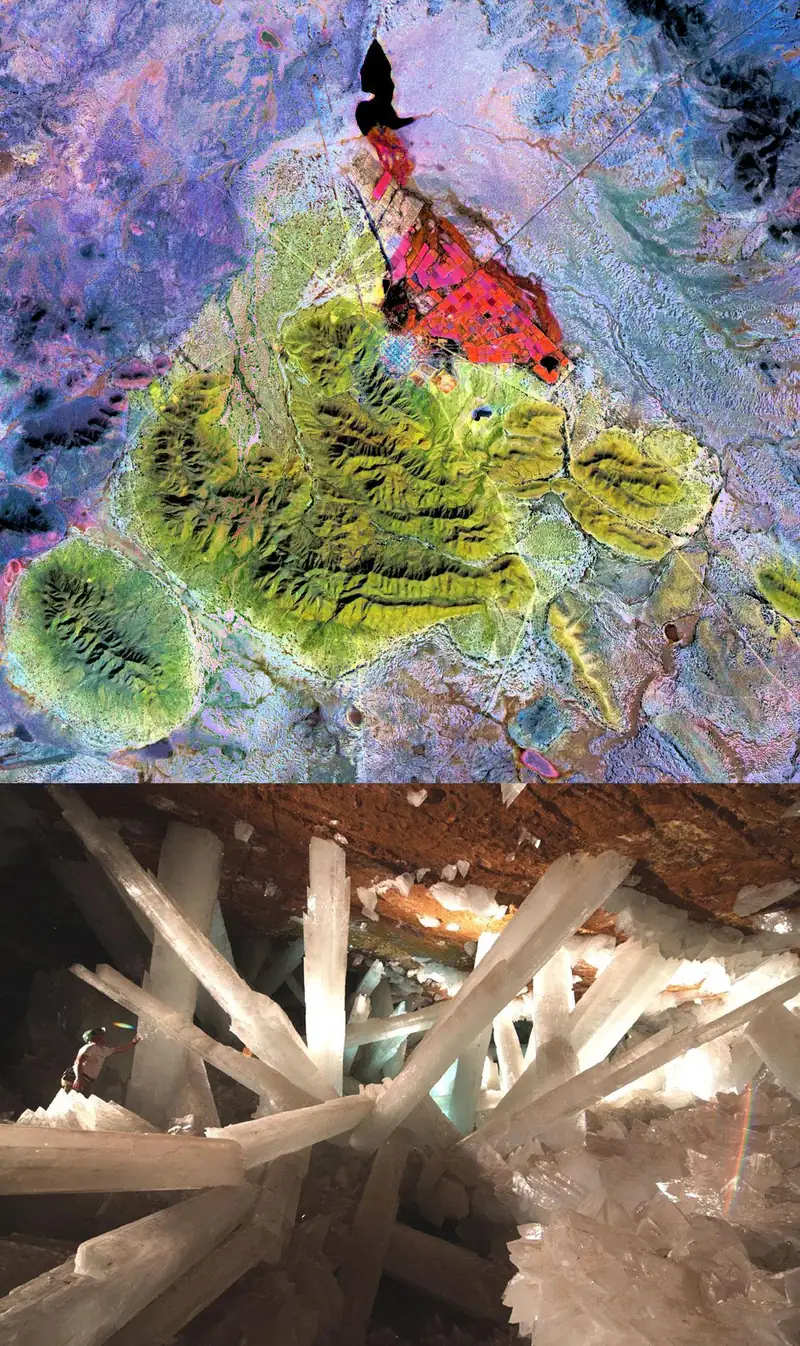
Naica Mine, Chihuahua, Mexico, NASA/GSFC/METI/ERSDAC/JAROS, and U.S./Japan ASTER Science Team (Public domain (NASA media, no copyright))
Mexico had its own silver mountains. ICOMOS says Zacatecas was founded in 1546 after the very rich San Bernabé silver lode was found. By 1550 there were 34 mines working. Output peaked in the 16th and 17th centuries, before Guanajuato overtook it.16
The silver needed a road. The first stretch of El Camino Real de Tierra Adentro carried silver from Zacatecas, San Luis Potosí and Guanajuato to Mexico City. Work on the road began in 1550, four years after the Zacatecas vein was found, with forts built along it against raids.19
Guanajuato silver was found in 1548. In the late 18th century the Valenciana mine there produced about a third of the world's annual silver. Mining stopped in 1816 during the war of independence, and British investors reopened it from 1868 to 1878.17
Mexico still leads. USGS estimates the world mined 26,000 t of silver in 2025, and Mexico mined 6,300 t of it. See our silver page and mining in Mexico for today's mines.18
The Manila galleons: silver to China
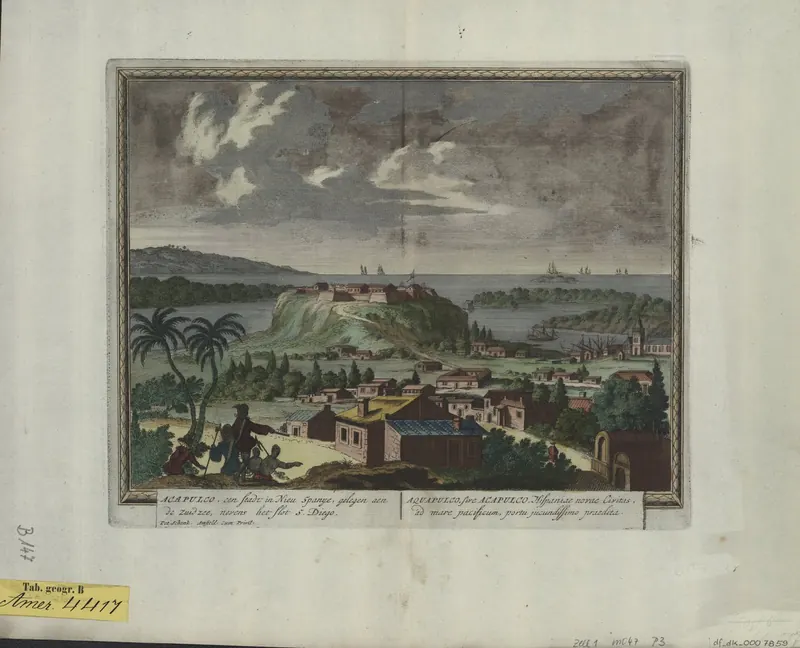
Ansicht von Acapulco, Kupferstich, 1702, Europeana (CC BY-SA 4.0)
In 1565 Legazpi sailed from Acapulco with five ships and founded the first Spanish settlement in the Philippines, at Cebu. That opened a route that ran for 250 years. The Manila galleons carried Mexican silver coin west across the Pacific. In Manila it bought Chinese silk and porcelain, which sailed back to Acapulco.21,22
Spain tried to limit the trade, to protect its own merchants. An export quota capped the Chinese goods sent to Mexico. It started at 250,000 pesos and was raised to 300,000 in 1702, 500,000 in 1734 and 750,000 in 1776.21
Why did silver flow to China at all? Silver was worth far more against gold in China than it was in Mexico. Merchants who carried it east could make a profit on the metal alone. Most American silver went to Seville to fund the Spanish empire. About a third of it, by one estimate, ended up in China.21
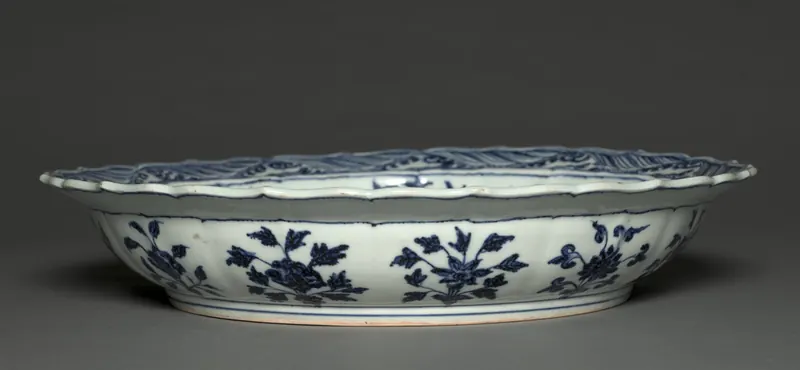
Japan was the other great supplier. In the second half of the 16th century it was China's main source of silver. That supply stopped in 1638, when Japan closed itself to foreign trade. From then on, American silver was the main supply.21
Japan's best known silver mine was Iwami Ginzan. Its silver seams were found in 1526, and a new smelting method called cupellation arrived around 1533, which sharply raised output. Output peaked in the 1620s to 1640s, when up to 10,000 people worked there. Draining water became too costly, and by 1823 247 of its 279 shafts were idle. The mine shut in 1923.20
- Cerro Rico de Potosi1545
- Huancavelica mercury mine1564
- Zacatecas silver mines1546
- Valenciana Mine (Guanajuato)1548
- Iwami Ginzan silver mine1526
- Almaden mercury mines
- Schwaz silver mines (Falkenstein)1420
- Kutna Hora silver mines1260
- Potosi silver to Arica (Ruta de la Plata)
- Huancavelica to Chincha mercury1574
- Chincha to Arica mercury1574
- Arica to Potosi mercury1574
- Zacatecas to Mexico City silver (Camino de la Plata)1550
- Mexico City to Acapulco (Pacific silver road)
- Acapulco to Manila silver (Manila galleon)1565–1815
- Manila to China silver
- Japanese silver to China1550–1638
- Havana to Seville silver (Bahamas channel)
The map shows how the pieces fitted. Silver left Potosí by pack animal for the Pacific port of Arica, a trip of 10 to 12 days in good weather. A royal letter of 30 December 1607 set the calendar for silver from Arica, Potosí and Oruro to reach Callao, the port of Lima, for the fleet. From Havana the treasure fleets crossed the Atlantic through the Bahamas channel to Seville.23,24

How much silver? The world chart from 1493
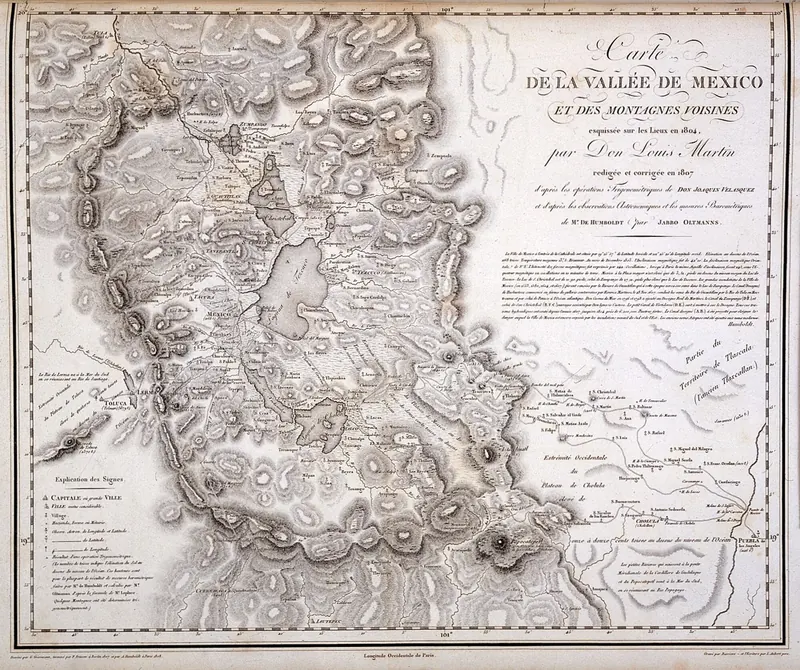
Atlas geographique et physique du royaume de la Nouvelle-Espagne : fondé sur des observations astronomiques, des mesures trigonométriques et des nivellemens barométriques / par Al. de Humboldt., Alexander von Humboldt; Aimé Bonpland (Public Domain Mark 1.0)
The US Mint collected the best estimates of world silver output in the early 20th century. It put average world output from 1493 at 1,511.05 thousand ounces a year. By 1898 the figure was 169,055.25 thousand ounces. The chart shows the rise, period by period and then year by year.25
World silver production, 1493 to 1899
World silver production rose from 47 tonnes in 1493 to 5,236 tonnes in 1899; the peak in this series is 5,258 tonnes in 1898. Before 1867 the world series gives period averages per year. Basis: fine silver, world mine output.
Sources: Annual Report of the Director of the Mint for the fiscal year ended June 30, 1915…; Annual Report of the Director of the Mint for the fiscal year ended June 30, 1915…; Historical Statistics for Mineral and Material Commodities in the United States (Data…
New finds kept the flow going. In 1832 silver was found at Chañarcillo, about 50 km south of Copiapó in Chile. In 1841 it yielded 92,000 marcos of silver, about 21,000 kg, in one year. In 1870 Chilean capital found silver at Caracoles, in what was then Bolivian territory. That boom faded within about five years.33,34
Then the price broke. Silver averaged 1.3602 dollars an ounce in 1859 and 0.6015 dollars in 1899, by US Mint figures. More silver was being mined than ever, and it was worth less than half as much.26
-56% price fall
Silver price, 1859 to 1899 (US Mint averages)26
In Bolivia, the fall pushed miners to a different metal. Bolivian tin output stood at 3,749.5 t in 1887 and had risen to 9,279.5 t by 1899 as silver faded. Potosí itself had a tin boom from the late 1890s. That story returns in chapter 10.23
- Spaniards find silver at Cerro Rico, Potosi
UNESCO dates the Spanish discovery of Cerro Rico to 1545.10
- A large silver vein is found at Zacatecas
The 1546 find at Zacatecas started the silver road to Mexico City.19,28
- El Camino de la Plata is opened to carry silver
The road from Zacatecas to Mexico City started to be developed in 1550, with forts against raids.19,29
- Legazpi reaches Cebu from Acapulco
Legazpi left Acapulco with five ships and founded the first Spanish settlement in the Philippines at Cebu.21,22
- Mercury amalgamation adopted for Potosi silver
Amalgamation let miners treat poorer ore and drove the output of Potosi, at a high cost in health to the workers.13,30
- Toledo sends Huancavelica mercury to Potosi through Arica
Viceroy Toledo chose a sea and land route through Arica for the mercury that made Potosi silver recoverable.14,31
- Manila galleon export quota rises to 500,000 pesos
The quota on Chinese goods sent to Mexico was raised from 250,000 pesos to 500,000 pesos by 1734.21,32
- Chanarcillo silver is discovered
The find about 50 km south of Copiapo drew thousands of adventurers and made fortunes.33,34,35
- Tres Puntas silver is discovered in Chile
The find kept Atacama silver output up as Chanarcillo began to tire.34
- Comstock Lode strikes
The Comstock set the pattern for the Western mining boom town. By the mid-1870s the lode was seen as played out.36,37,38
- Caracoles silver is found in Bolivian territory by Chilean capital
The boom gave a last push to Chilean silver mining but faded within about five years.34
- Schieffelin finds silver at Tombstone
The NPS file says Tombstone became the largest town in Arizona Territory.39,40
- Charles Rasp finds the Broken Hill orebody
The orebody supported the world's largest silver-lead-zinc mining district and led to BHP.41,42
- Antofagasta railway reaches Oruro
The line to the Pacific cut costs of sending Bolivian ore to Europe.23,43,44
Silver did something no metal had done before. It linked the mines of the Andes and Mexico to the markets of Seville, Manila and China in one system. A miner at Potosí, a merchant in Manila and a silk weaver in China were part of the same chain of trade.8,21
It also set patterns that later rushes repeated: forced or cheap labour, toxic chemistry and towns that boomed and faded with the ore. Mercury vapour from Potosí and Huancavelica is one of the earliest large-scale cases of mining pollution with numbers attached.9,13
Next: going deeper
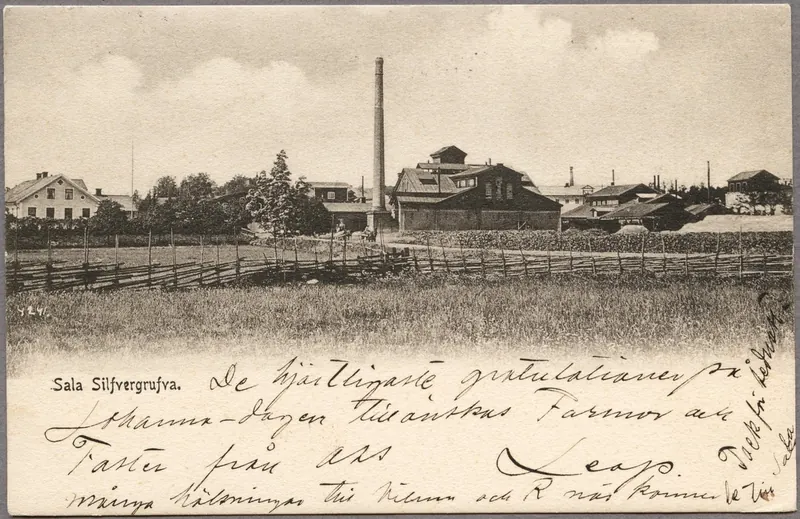
Back in Europe, the silver mines had a different problem. They were getting deep, and deep mines flood. At Joachimsthal, a silver town in the mountains of Bohemia, a young town doctor named Georg Bauer sat down to write everything he could learn about mining. His book, De re metallica, came out in 1556. About 150 years later, a man from Dartmouth in Devon built a steam engine to pump water out of mines. Read on in chapter 3: deep mines, steam and the science of mining.45,46