

Bolivia's tin barons
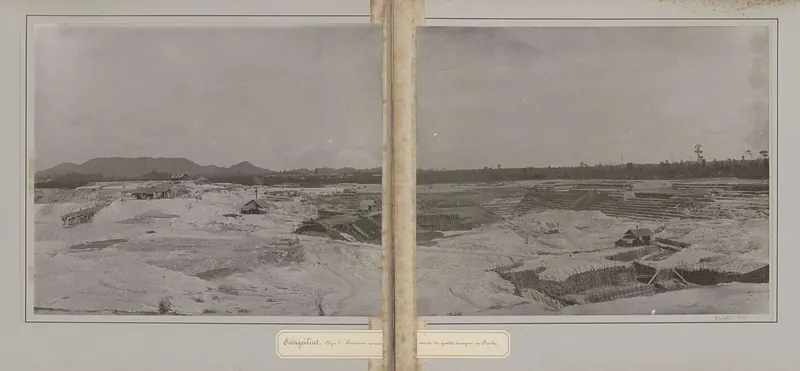
Motif: Three motifs from the tin mine La Union: Lamadjur, the road there and Native Americans (= workers in the mine) wh, Europeana (CC0 1.0)
When the silver of Potosí ran thin, Bolivia found a new metal. As we saw in chapter 2, the easy silver ore of Cerro Rico was largely gone by about 1600. From the late 1890s a tin boom followed.4
Three men came to control most of Bolivia's tin. The first was Simón Patiño, born in the village of Karasa. He became known as the Tin King. Later he bought tin mines in Thailand and Malaysia, and for decades he dominated the world tin market.1,3
The second was Mauricio Hochschild. Risk-taking in Bolivian mining made him one of the richest men in South America. Critics called him the toughest of the three. The third was Carlos Víctor Aramayo, educated at Oxford. Together they were seen as a cartel with more power than the Bolivian state itself.3
Hochschild's story has a twist that was hidden for decades. Documents found from 1999 show that he helped as many as 20,000 Jews escape the Nazis, paying for them to resettle in Bolivia from 1939. In 2016 Unesco added his company archive to its Memory of the World Register.3
20,000 people
Jews helped to escape the Nazis to Bolivia by tin baron Mauricio Hochschild3
Patiño died in Buenos Aires on 20 April 1947. His son Antenor inherited the fortune. A Sunday Times financial journalist put it at 200 million dollars.1

1952: Bolivia nationalises the tin mines
A silver mine in Potosí, Bolivia: cross-section and miners digging. Engraving, ca. 1750., Unknown (Wellcome Collection) (Public Domain Mark 1.0)
In 1951 Víctor Paz Estenssoro won Bolivia's presidential election, but the military annulled the result. In April 1952 miners and city workers rose up and brought him back from exile.2,8
On 31 October 1952 the new government nationalised the three largest tin companies: Patiño, Hochschild and Aramayo. A state mining company, COMIBOL, had been created on 2 October to run them. Medium-sized mines were left alone, and compensation was promised.5,6
COMIBOL took over about 163 mines. The miners had a say in running them. Their union leader, Juan Lechín, later became Vice President, and the miners' federation shared in the management of the company.7,8
The barons were not ruined. Hochschild had been jailed twice and threatened with execution before he fled into exile. Antenor Patiño, by 1952, already headed Thailand Tin Mines and British American Tin Mines. Much of the family business was already outside Bolivia.1,3
State control of tin shaped Bolivia's economy for decades. You can read about the country's mines today on our mining in Bolivia page.5

Chile copper nationalisation and the birth of Codelco
Chiquicamata Mine, Chile, NASA/METI/AIST/Japan Space Systems, and U.S./Japan ASTER Science Team (Public domain (NASA media, no copyright))
Chile's great copper mines had been built by American companies. Chuquicamata began in 1915 under the Chile Exploration Company, owned by the Guggenheim family of New York. Its engineers used open-pit methods that were new at the time. El Teniente, in the Andes of central Chile, was started by the Braden Copper Company of the United States in 1904.9,16
Chile moved in two steps. In 1966 the state took a 51 per cent share of the big mines. Then Salvador Allende, confirmed as president on 24 October 1970, went further.9,15
On 21 December 1970 Allende proposed an amendment to the constitution to take over the copper companies. Congress passed it on 11 July 1971 and it became law five days later. Law 17,450 made the large foreign-owned companies, mainly Kennecott and Anaconda, wholly state owned. The US companies received little or no compensation.11,15
11 Jul 1971 vote
Chile's Congress passes the copper nationalisation amendment11
Allende died during the military coup of 11 September 1973. The words recorded for him that day were these.15
Long live Chile! Long live the people! Long live the workers!
The military government did not hand the mines back. Decree Law 1350 created Codelco on 1 April 1976 to run all the large mines nationalised in 1971. It is still Chile's state copper company. In 2019 it produced 29 per cent of Chile's copper, and copper mining made up 8.9 per cent of Chile's economy.12,17
Chuquicamata is still a state mine. Its open pit gave way to an underground mine, which began operating in August 2019 at a total cost of about 5.5 billion US dollars. USGS says it was meant to add 40 years to the mine's life.9,13
The world wanted ever more copper through these years. The chart shows world mine output from 1950, by USGS records: from 2.49 Mt in 1951 to 5.94 Mt in 1971, and 11 Mt by 1996.14
World copper production, 1950 to 2000
World copper production rose from 2,380,000 tonnes in 1950 to 13,300,000 tonnes in 2000; the peak in this series is 13,300,000 tonnes in 2000. Basis: copper content.
Sources: Historical Statistics for Mineral and Material Commodities in the United States (Data…
More of Chile's copper story is on our mining in Chile page, and in chapter 4.9

Zambia, Congo and the Copperbelt
Kopermijn te Kolwezi in de provincie Shaba (Katanka), Mieremet, Rob / Anefo / Europeana (Public Domain Mark 1.0)
In the Congo, Union Minière du Haut Katanga had run the copper mines of Katanga since 1906. In 1967 the Congolese state nationalised it. It became Gecamines, the country's largest mining company.18
Next door, Zambia had a different problem. It was landlocked, and its copper had to cross other countries to reach the sea. When Rhodesia declared independence in 1965, Zambia's routes south were cut. In 1969 copper earned 97 per cent of Zambia's foreign exchange.24
On 10 August 1969 President Kenneth Kaunda announced the nationalisation of the copper mining firms. The state took 51 per cent of the two main groups, Roan Selection Trust and Rhodesian Anglo American. The deals were completed in June and August 1970.19,25
Zambia also needed a new way out. China agreed in 1967 to fund a railway from the Copperbelt to Dar es Salaam in Tanzania, at a cost of 415 million US dollars. The TAZARA line opened in 1976.24,26
In 1982 Zambia's two state copper companies were merged into Zambia Consolidated Copper Mines, or ZCCM, on 25 March. The state held 60.3 per cent. But the plan did not last. All of ZCCM's operating divisions had been privatised by 2000.20,21
Then came a shock that showed how much the world depended on this one region. Insurgents based in Angola invaded Shaba, as Katanga was then called, in 1977 and 1978, and occupied Kolwezi. USGS says this led to a panic in the cobalt market. The director of USGS later wrote that cobalt prices rose precipitously.22,23
USGS records show how small the cobalt market was then. The whole world mined 20,800 t of cobalt in 1977. By 1985 the figure was 47,400 t.27
The region's exports were already in trouble. The Benguela Railway to Lobito, on the Atlantic, had been the shortest route for Shaba's copper, with a transit time of 10 to 13 days. It was closed to Zairian traffic from August 1975. The route via Lake Tanganyika to Dar es Salaam took 20 to 30 days and needed two changes of transport.28
The same Katanga mines had supplied uranium for the Manhattan Project, as we saw in chapter 9. Our Congo copper and cobalt story follows the region to the present day.29
Producers also tried to work together. For decades, tin was governed by an International Tin Agreement between the countries that mined tin and the countries that used it. Its council supported the tin price, borrowing money to do so when it had to.30,31
On 24 October 1985 the money ran out. The International Tin Council stopped supporting the market, having borrowed over 900 million pounds. The London Metal Exchange suspended trading in tin, and the tin price fell to about half its previous level.30,31
900m pounds
Borrowed by the International Tin Council before it collapsed on 24 October 198530
Bolivia was hit hard. In 1985, the same Víctor Paz Estenssoro who had nationalised the mines in 1952 was president again. His new economic policy cut 23,000 mining jobs.8
World tin output tells the story in numbers. USGS records 245,000 t in 1980 and 181,000 t in 1985. The 2025 estimate is 290,000 t, with China, Indonesia and Peru the top three producers.32,33
Bolivia still mines tin. USGS estimates it produced 15,000 t in 2025. See our tin page for more, and our lesson on price shocks for how the tin collapse compares with others.32

Panguna, Grasberg and the price of a mine
Panguna Copper Deposit, Papua New Guinea, NASA/METI/AIST/Japan Space Systems, and U.S./Japan ASTER Science Team (Public domain (NASA media, no copyright))
Not every fight over a mine was settled by law. On the island of Bougainville in Papua New Guinea, the Panguna copper mine opened in 1972. In 17 years it produced concentrate holding 3 Mt of copper, 306 t of gold and 784 t of silver. That was about 44 per cent of the country's exports over the period.34
On 15 May 1989 militant activity halted production at Panguna. The mine has stayed closed ever since. The closure became tied to the Bougainville conflict. One estimate puts deaths in the conflict at up to 15,000, a figure that is disputed.34,36
In Indonesia, a remote copper outcrop had a stranger history. On a 1936 expedition to climb the highest mountain in the South Pacific, the geologist Jean Jacques Dozy described a mountain of ore called the Ertsberg. His report appeared as war reached the Netherlands, and it lay unnoticed until 1959.35
Forbes Wilson of Freeport read it, and in 1960 he trekked about 200 miles to the outcrop. Mining began in 1972. The nearby Grasberg deposit was found in 1988. Its open pit, worked from 1990 to 2019, produced over 27 billion pounds of copper and 46 Moz of gold.35,37

The new resource nationalism: export bans and state shares
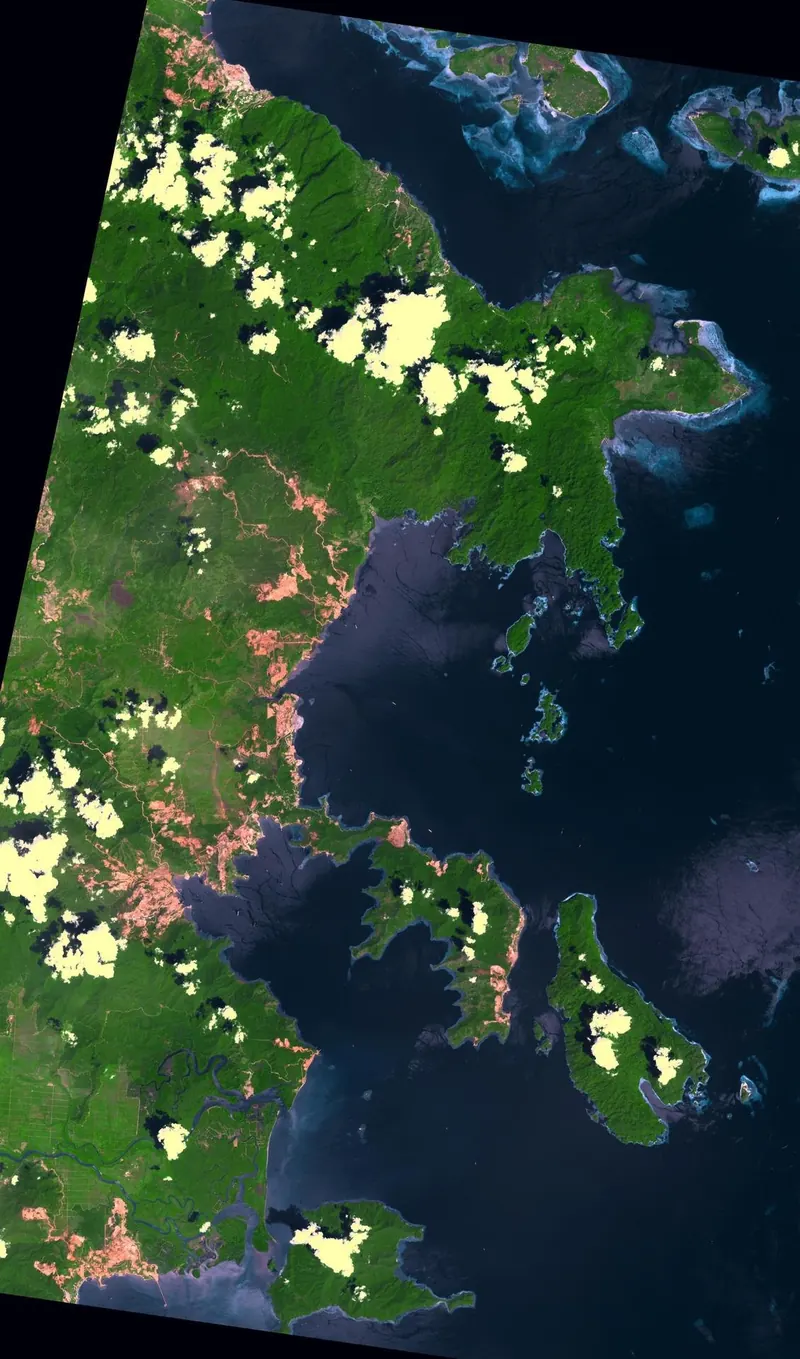
Sulawesi, Indonesia, NASA/METI/AIST/Japan Space Systems, and U.S./Japan ASTER Science Team (Public domain (NASA media, no copyright))
In the twenty-first century the same idea has often taken a different form: a demand that more of the work be done at home. Indonesia's mining law of 2009 included a ban on exports of unprocessed minerals from January 2014. The ban was postponed several times.58
In January 2020 Indonesia banned exports of nickel ore, two years earlier than it had announced. The aim was to make miners supply processors in Indonesia and build smelters there. The European Union challenged the ban at the World Trade Organization.38
Output grew fast. Indonesia mined 771,000 t of nickel in 2020, by USGS figures. The estimate for 2025 is 2,600,000 t, out of a world total of 3,900,000 t. A ferronickel smelter commissioned at Weda Bay in 2020 has capacity for 300,000 t a year.32,40,59
2.6 Mt
Indonesian nickel mine output in 2025, two thirds of the world total (USGS estimate)32
Other countries chose state shares. Laws passed in Tanzania in July 2017 require the government to own at least 16 per cent of mining projects, and allow contracts to be renegotiated. South Africa's amended Mining Charter of 2010 set a target of 26 per cent Black ownership of mining companies.60,61
In February 2025 the Democratic Republic of the Congo temporarily banned cobalt exports. USGS says the aim was to deal with oversupply and low prices. Fifty years after the Shaba shock, the Congo was again moving the cobalt market, this time by choice.62
- Cerro Rico de Potosi1545
- Chuquicamata1915
- El Teniente1905
- Panguna mine1972
- Grasberg minerals district1972
- Sorowako
- Zambian copper via TAZARA to Dar es Salaam1976
- Katanga copper via the Benguela Railway to Lobito–1975
- Katanga copper via Lake Tanganyika to Dar es Salaam
- Bolivia nationalises the tin mines1952
- Union Miniere nationalised as Gecamines1967
- Zambia takes 51 percent of the copper mines1969
- Chile nationalises large copper mining1971
- Shaba invasions trigger a cobalt market panic1978
- International Tin Council collapse1985
- Panguna mine halted1989
- Indonesia bans nickel ore exports2020
- Materials Act
It removed common-variety materials from the 1872 Mining Law regime.41,42
- Bolivia nationalises the tin mines
State control of tin shaped Bolivia's economy for decades.5,6,43
- Katanga declares its secession from Congo
The copper-rich province broke away as an unrecognised state (Wikidata date).44
- London Gold Pool formed
Its collapse was a step on the way to the end of dollar convertibility.45,46
- Gecamines established
Gecamines established.47
- Federal Coal Mine Health and Safety Act signed
- Zambia takes 51 percent of the copper mines
The state became the main owner of the Copperbelt for the next 30 years.21,25,49
- Mining and Minerals Policy Act
It is the policy statement that sits over the 1872, 1920 and 1947 laws.41,42
- Nixon ends dollar convertibility into gold
- Mabo v Queensland (No 2) heard
Mabo v Queensland (No 2) heard.51
- Wittenoom degazetted
The former town lost its gazetted status.52
- China cuts rare earth export quota
USGS says rare earth product prices rose sharply in 2010 after the drop in exports.53,54,55
- Indonesia bans nickel ore exports
USGS records a nickel-ore export ban in force from 2020 to require domestic processing.56
- China begins export controls on gallium and germanium
It was formal Announcement No. 23 of 2023 (3 July 2023) and put gallium and germanium exports under licence.55,57
The debate over who should profit from a mine has no final answer. Our lesson on resource nationalism looks at what history shows about the trade-offs, and our critical minerals section covers the metals governments care most about today.58
Next: the giants
While governments argued over ownership, the mines themselves were growing to sizes no prospector had imagined. Grasberg's open pit alone gave up 27 billion pounds of copper. Read on in chapter 11: the largest mines in the world.37,63


