

Form one: the state as miner
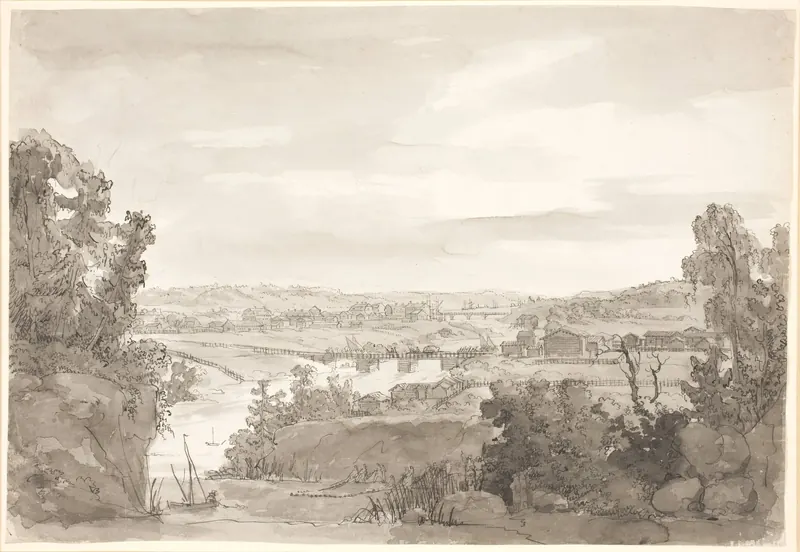
View of Kongsberg, Norway, 278_person / Europeana (Public Domain Mark 1.0)
The idea that ore belongs to the state is very old. What changes is how the state takes its share. Across the cases in our data, five forms stand out: the state as miner, nationalisation, partnership, royalties and rules, and export bans. Chapter 10, whose ore is it?, tells the story in order. This lesson compares the forms.1
In Norway, two herding children found silver at Kongsberg in the summer of 1623, and state mining began that autumn. The state ran the mines for more than three centuries. The workforce peaked at 4,075 in 1770. Parliament voted in 1955 to close the works, and the last smelting took place in 1958.1
1623 to 1958 years
State silver mining at Kongsberg, Norway1
In China today, most mining and mineral processing is carried out by state-owned or state-controlled companies. State owners held 86 per cent of the assets in coal mining and washing in 2023.2
A state miner does not escape the life cycle of a mine. Kongsberg still closed in the end, after 335 years.1,2

Form two: nationalisation
Motif: Three motifs from the tin mine La Union: Lamadjur, the road there and Native Americans (= workers in the mine) wh, Europeana (CC0 1.0)
The best known form is taking over foreign or private mines. Bolivia nationalised its three largest tin companies on 31 October 1952, after a revolution, and set up the state company COMIBOL. Compensation was promised.3,4
Chile followed in two steps: a 51 per cent state share in 1966, then full nationalisation of the big copper mines in July 1971. The US companies received little or no compensation.6,7
The Congo nationalised Union Minière in 1967, creating Gecamines. Zambia took 51 per cent of its two copper groups in 1969 and 1970.8,9
The outcomes differed widely. Chile's Codelco, formed in 1976, which runs Chuquicamata, still runs the mines it was given and produced 29 per cent of Chile's copper in 2019. Zambia merged its state copper companies into ZCCM in 1982, then privatised all of ZCCM's operating divisions by 2000. In Bolivia, the 1985 tin collapse led to the loss of 23,000 mining jobs.5,10,11,12
A state miner can still invest on a large scale. Codelco opened an underground mine beneath the Chuquicamata pit in August 2019, at a total cost of about 5.5 billion US dollars. USGS says it was meant to add 40 years to the mine's life.13
State companies also step into new parts of the trade. In March 2021 Gecamines launched a subsidiary with a monopoly on buying and selling cobalt from artisanal miners. In May 2022 the Minister of Mines announced plans to cancel it.14
Tanzania shows a full circle. De Beers ran the Williamson diamond mine until 1973. The state company STAMICO then ran it for 19 years, and De Beers took 75 per cent again in 1993.15
Some countries chose to share rather than take. In Botswana, De Beers geologists found the Orapa pipe in 1967. The De Beers Botswana Mining Company was incorporated on 23 June 1969. It became a 50:50 partnership of the government and De Beers in 1975 and was renamed Debswana in 1992.16

The partnership opened Orapa in 1971, Letlhakane in 1977 and Jwaneng in 1982. In 2019 Jwaneng alone had a capacity of 30 million carats a year. De Beers calls it the richest diamond mine in the world by value.16,17
Namibia took the same path after independence. De Beers and the Namibian government formed Namdeb in 1994, a 50:50 partnership to mine the country's diamonds.18
In Niger, the state company Sopamin held 36.6 per cent of the SOMAIR uranium company and 31 per cent of COMINAK, with the French company Orano as operator.19
In Guinea, the Compagnie des Bauxites de Guinée has been a mixed company since 1963, with 49 per cent held by the state and 51 per cent by a group of foreign partners.20,21
50:50 share
Botswana government and De Beers in Debswana, from 197516
Later laws set minimum state or local shares. Tanzania's laws of July 2017 require at least 16 per cent government ownership of mining projects. South Africa's 2010 Mining Charter set a target of 26 per cent Black ownership. See mining in Botswana for more.22,23

Form four: royalties and rules
Mount Whaleback Iron Ore Mine, Australia, NASA/METI/AIST/Japan Space Systems, and U.S./Japan ASTER Science Team (Public domain (NASA media, no copyright))
The quietest form is a royalty, a payment on each tonne or each dollar mined. In the United States, the General Mining Law of 10 May 1872 still lets prospectors claim many minerals on federal land, and the Bureau of Land Management still gives prices of 5 dollars an acre for lode claims. The Mineral Leasing Act of 1920 moved coal, phosphate and some other minerals to leases with a royalty.27,28
Royalties can be private too. Lang Hancock never owned an iron ore mine. His wealth came from a 1963 deal, signed by Hancock and Peter Wright, for royalties of 2.5 per cent of the value of all ore mined at Hamersley Iron's deposits, in perpetuity.29
For a state, royalties tie its income to the market. Western Australia's mineral and petroleum royalty receipts and related grants were 10.6 billion Australian dollars in 2024-25, the lowest in five years, against a record of about 14 billion in 2021. Iron ore made up 81 per cent of them.26
81% share
Iron ore's share of Western Australia's royalty receipts in 2024-2526
Mongolia's Minerals Law of 2006, amended in 2014, shows the forms can be swapped. Under it, the state's share in a strategic deposit can be replaced by a royalty.30
Form five: export bans
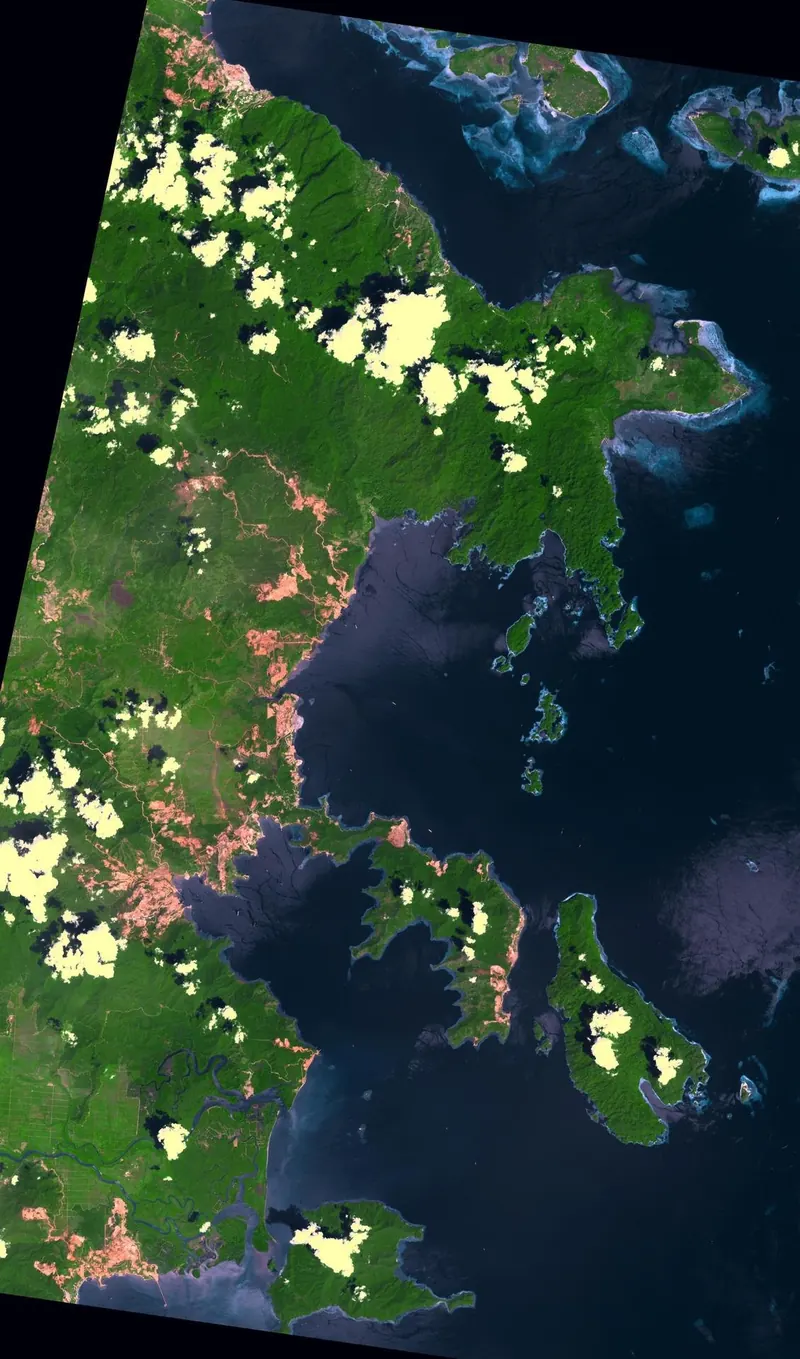
Sulawesi, Indonesia, NASA/METI/AIST/Japan Space Systems, and U.S./Japan ASTER Science Team (Public domain (NASA media, no copyright))
An export ban keeps ore at home. Australia banned iron ore exports in 1938, out of fear of a militaristic Japan, and lifted the ban in 1960. The Pilbara iron industry only began after that.25
Indonesia used the tool the other way, to build industry. Its mining law of 2009 included a ban on exports of unprocessed minerals from 2014, which was postponed several times. In January 2020 it banned nickel ore exports outright, to make miners supply processors at home.31,34
The policy spread to other ores. In 2022 Indonesia mined about 30.4 Mt of bauxite and exported about 19 Mt, all of it to China, and it planned a bauxite export ban from mid-2023. Smelters followed the nickel ban: a ferronickel plant at Weda Bay, commissioned in 2020, has capacity for 300,000 t a year.35,36
Indonesia's nickel output rose from 771,000 t in 2020 to an estimated 2,600,000 t in 2025, two thirds of the world total. The European Union challenged the ban at the World Trade Organization.37,38
China's rare earth export quota cuts of 2010 and the Congo's temporary cobalt export ban of February 2025 are other cases. Each was aimed at the price or at local processing, not at ownership.33,39

What the record shows
Chiquicamata Mine, Chile, NASA/METI/AIST/Japan Space Systems, and U.S./Japan ASTER Science Team (Public domain (NASA media, no copyright))
Looking across the cases, a few points stand out. The same tool gave different results in different places: Codelco lasted, ZCCM was privatised within two decades. Partnerships, as in Botswana and Namibia, have lasted for half a century. Ownership often moved back and forth, as at Williamson in Tanzania.5,16,56
The forms also shifted over time. The great nationalisations clustered between 1952 and 1971. Since 2000, the more common tools have been minimum state shares, processing rules and export bans.30,34
- Kongsberg silver mines1623
- Cerro Rico de Potosi1545
- Chuquicamata1915
- Orapa1971
- Jwaneng1982
- Grasberg minerals district1972
- Bolivia nationalises the tin mines1952
- Union Miniere nationalised as Gecamines1967
- Zambia takes 51 percent of the copper mines1969
- De Beers Botswana Mining Company formed1969
- Chile nationalises large copper mining1971
- Indonesia bans nickel ore exports2020
- General Mining Law of 1872
The law remains the basis for claims to locatable minerals on US federal land.27,40
- Treaty requires Chile to build the Arica-La Paz railway
The peace treaty left Bolivia landlocked and Chile promised a railway for Bolivian trade.41,42
- Mineral Leasing Act
The BLM says that since 1920 the federal government has leased fuels and certain other minerals, while locatable minerals stay under the 1872 Mining Law.28,40
- Gold Reserve Act signed
It set the 35 dollar price that Bretton Woods later used as the dollar anchor.40,43
- Bretton Woods conference
Bretton Woods conference.44
- Bolivia nationalises the tin mines
State control of tin shaped Bolivia's economy for decades.3,4,45
- Katanga declares its secession from Congo
The copper-rich province broke away as an unrecognised state (Wikidata date).46
- Rhodesia's UDI cuts Zambia's copper routes
Zambia faced a transport emergency and sought a route to the sea through Tanzania.47,48
- Federal Coal Mine Health and Safety Act signed
- Zambia takes 51 percent of the copper mines
The state became the main owner of the Copperbelt for the next 30 years.5,9,50
- Nixon ends dollar convertibility into gold
- Kimberley Process Certification Scheme comes into force
It sets rules to keep conflict diamonds out of the legal supply chain.52,53
- China cuts rare earth export quota
USGS says rare earth product prices rose sharply in 2010 after the drop in exports.33,54,55
- Indonesia bans nickel ore exports
USGS records a nickel-ore export ban in force from 2020 to require domestic processing.35
None of these cases tells what any government will do next. They show that the question of who should benefit from a mine has been answered in many ways, and that the answers rarely stay fixed.
Next in this series: price shocks and how supply responded. For today's most contested metals, see our critical minerals section.57


