
The first licence: who may work underground
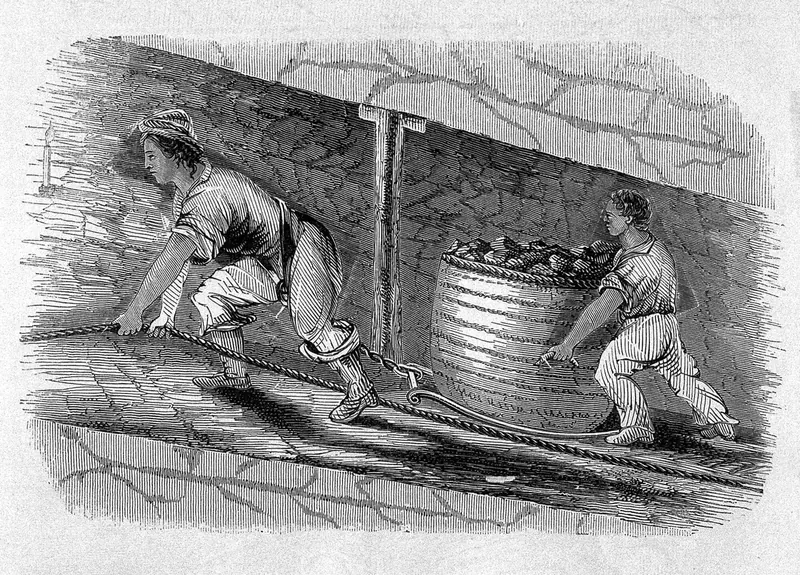
The physical and moral condition of the chil, Unknown (Wellcome Collection) (CC BY 4.0)
The idea that mining needs public consent is old, even if the phrase is new. In Britain, the Mines and Collieries Act of 1842 banned women and girls from working underground. The picture comes from a report of the time on the condition of children working in mines.3
In the United States, consent broke down violently at Ludlow, Colorado. On 20 April 1914, during a strike by the United Mine Workers, National Guardsmen aligned with the Colorado Fuel and Iron Company attacked the strikers' tent colony. The attack killed 21 people, including 11 children, and set off ten days of fighting.1
The cost fell on the owner's name. John D. Rockefeller Jr., the main stockholder of Colorado Fuel and Iron, became the chief target of union and public anger. Protesters, among them the writer Upton Sinclair, gathered outside his office in New York. The National Park Service links the massacre to the debate on the eight-hour working day.2

Aberfan: when the waste comes down
Kinderen zingen met volwassenen in kerk ( Zion Baptist Chapel ) te Aberfan, Engeland, Fotograaf Onbekend / Anefo / Europeana (Public Domain Mark 1.0)
On 21 October 1966 a colliery tip above the Welsh village of Aberfan slid down onto Pantglas Junior School and nearby houses. It killed 144 people, 116 of them children. A tribunal under Lord Justice Edmund Davies found that the blame rested on the National Coal Board.4,5
116 children
Of the 144 people killed at Aberfan, 21 October 19664
Law followed. The Mines and Quarries (Tips) Act 1969 covers the security of tips at mines and quarries. Chapter 7, mining disasters and the laws they forced, tells how often British and American safety law was written after a disaster.6
Aberfan showed that a mine's waste can threaten people who never worked in it. Most of those killed were children at their desks.4,5

Panguna and Ok Tedi: mines and the people downstream
Panguna Copper Deposit, Papua New Guinea, NASA/METI/AIST/Japan Space Systems, and U.S./Japan ASTER Science Team (Public domain (NASA media, no copyright))
The Panguna copper mine on Bougainville in Papua New Guinea opened in 1972. In 17 years it produced concentrate with 3 Mt of copper and 306 t of gold, worth about 44 per cent of the country's exports. On 15 May 1989 militant activity halted production. The mine has never reopened.7
The mine moved nearly 1 billion t of waste. Its closure became tied to the Bougainville conflict, in which one estimate, disputed, puts deaths at up to 15,000. A mine that had earned almost half of a country's exports was lost entirely.9,10
On the mainland of Papua New Guinea, landowners sued BHP in 1994 over mine waste in the Ok Tedi and Fly rivers. A settlement followed in 1996. In February 2002 BHP Billiton withdrew from the mine and moved its 52 per cent stake to the PNG Sustainable Development Program.8
The two cases show two endings: one mine closed by conflict, and one owner leaving a mine that kept running.7,8

Tailings dams: Mariana and Brumadinho
Flooding at Iron-Ore Mine, SE Brazil, NASA/GSFC/METI/ERSDAC/JAROS, and U.S./Japan ASTER Science Team (Public domain (NASA media, no copyright))
In November 2015 the Fundão tailings dam at the Samarco iron ore operation near Mariana, Brazil, failed. It held 56.4 million cubic metres of tailings after seven years of use. The Guardian says 19 people died. It is described as Brazil's worst environmental disaster, and it led to the largest mining liability cases in Brazil and the United Kingdom.11,12
Just over three years later, in 2019, the tailings dam at the Córrego do Feijão iron ore mine near Brumadinho collapsed. It killed 270 people. It is described as Brazil's worst industrial disaster.13
270 deaths
Brumadinho tailings dam collapse, Brazil, 201913

Both dams held waste from iron ore mines. Together the two failures killed 289 people. See mining in Brazil for the country's mines today, and mining in South Africa for the country where Marikana lies.11,13

Workers and neighbours: Marikana and Kabwe
Kopermijn te Kolwezi in de provincie Shaba (Katanka), Mieremet, Rob / Anefo / Europeana (Public Domain Mark 1.0)
On 16 August 2012 police shot and killed 34 striking mineworkers near the Lonmin platinum mine at Marikana in South Africa. The Farlam Commission sat from October 2012 to November 2014. It found that Lonmin had failed to engage with its workers and recommended that prosecutors investigate the killings.14
At Kabwe in Zambia, a lead mine and smelter polluted the area from 1904 to 1994, according to Human Rights Watch. The mine closed in 1994 with no full clean-up. A 2018 study found over 95 per cent of children in exposed townships had raised levels of lead in their blood.15
In Western Australia, asbestos was mined at Wittenoom from 1933 to 1966. The state phased the town down from 1978, cut the power in 2006 and removed the town from official maps in June 2007. The state says the remnants have caused thousands of deaths.16,17
In Montana, the Berkeley Pit at Butte mined copper from 1955 to 1982. When the pumps were switched off, a pit lake formed. In 2002 the United States and Montana announced an 87 million dollar settlement with ARCO and five other companies to control its acidic, metal-laden water.18,19

Juukan Gorge and the cost to a company
Pilbara, NW Australia, NASA/METI/AIST/Japan Space Systems, and U.S./Japan ASTER Science Team (Public domain (NASA media, no copyright))
In May 2020 Rio Tinto blasted the rock shelters at Juukan Gorge in the Pilbara to expand its Brockman 4 iron ore mine. The shelters showed 46,000 years of continuous human habitation. The blast was legal under section 18 of Western Australia's Aboriginal Heritage Act.20,21
Legal was not enough. After a board review in August 2020, Rio Tinto's chief executive and two senior executives lost their 2020 bonuses. Juukan Gorge became a reference point for what miners owe the traditional owners of the land they work.21,23
Some arrangements were built to share the benefits from the start. In Alaska, Teck runs the Red Dog zinc and lead mine on land leased from the NANA Regional Corporation, an Alaska Native corporation that receives a share of net proceeds. Red Dog began production in 1989.22
Safety and public land: the rules tighten
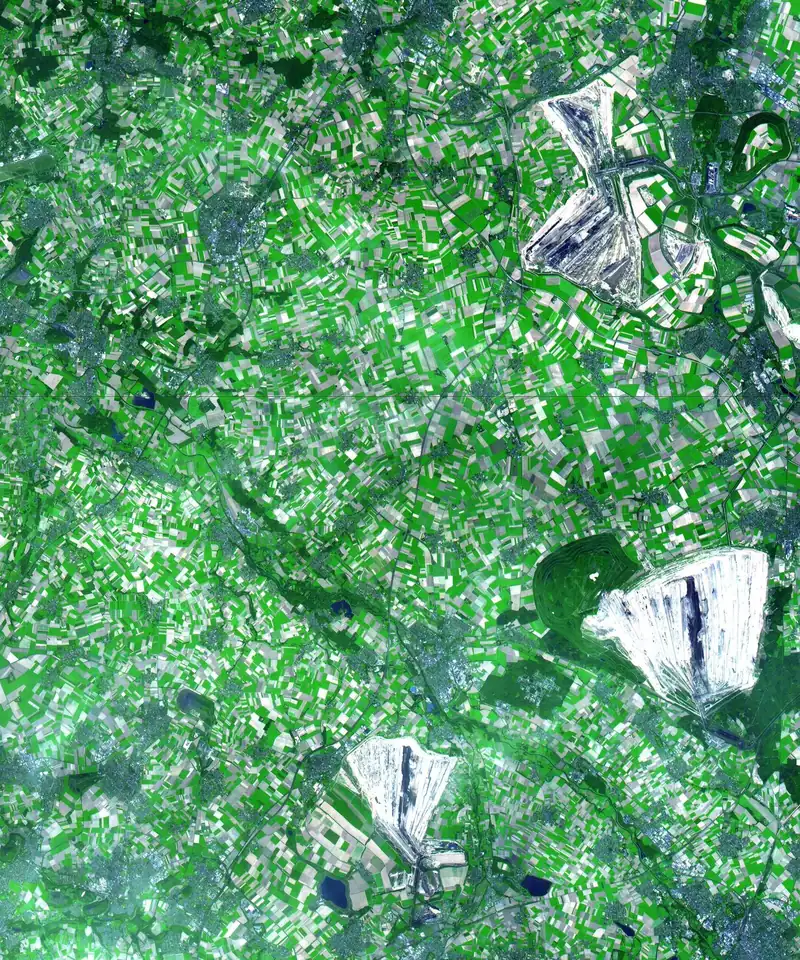
Coal Mining, Germany, NASA/GSFC/METI/ERSDAC/JAROS, and U.S./Japan ASTER Science Team (Public domain (NASA media, no copyright))
Public trust also rests on safety. In the United States, President Nixon signed the Federal Coal Mine Health and Safety Act on 30 December 1969. It set federal health and safety rules for coal mines.26
Rules do not end the risk. On 5 April 2010 a coal dust explosion that began as a methane ignition killed 29 miners at the Upper Big Branch mine in West Virginia. It was the worst US coal disaster in 40 years. The Mine Safety and Health Administration blamed unlawful company practices.27
In New Zealand, an explosion at the Pike River coal mine on 19 November 2010 also killed 29 men. The Royal Commission found the company's health and safety systems inadequate and criticised the government department responsible. Among its 16 main recommendations was a new independent safety regulator.24
The environment brings its own tests. The Summitville gold mine in Colorado drew wide public attention in 1992 and 1993 for its environmental problems. USGS says it set off a national debate on the rules for mining on public lands.25
What the cases show
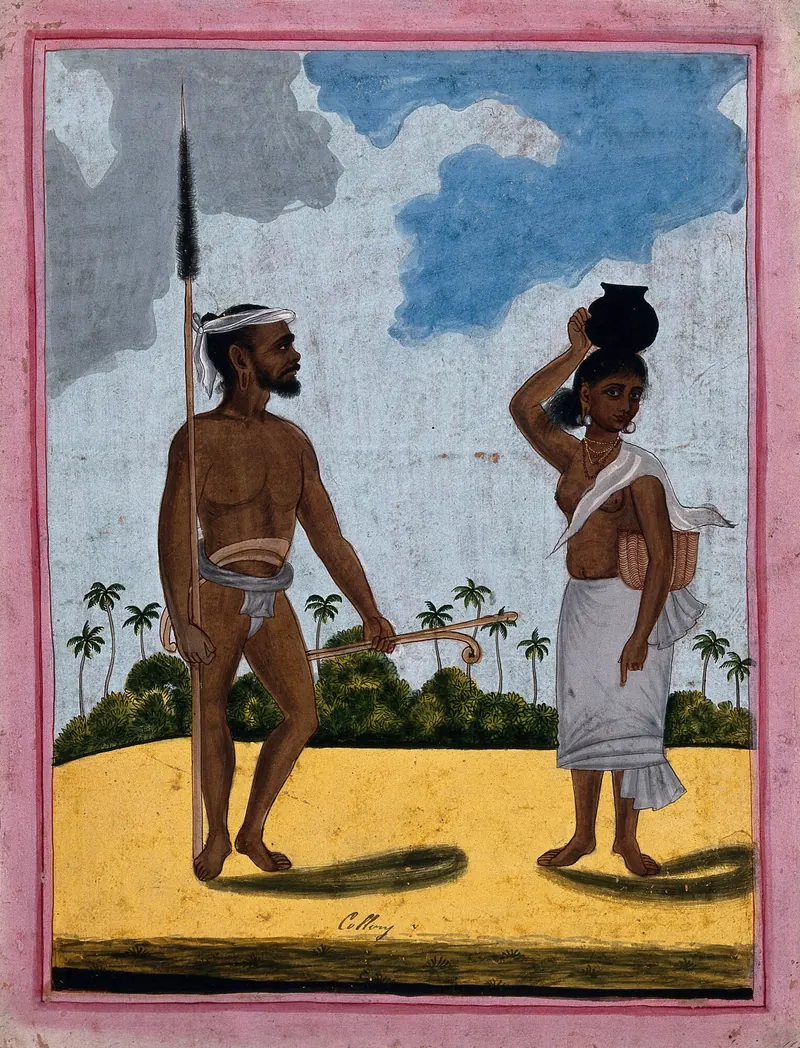
Collier and wife. Gouache drawing., Unknown (Wellcome Collection) (Public Domain Mark 1.0)
Looking across these cases, a few points recur. A legal permit did not protect a mine that lost local consent, as Panguna and Juukan Gorge show. The costs of losing trust often arrived years later and fell on people far from the mine, as at Aberfan, Kabwe and Wittenoom. And the costs reached the companies too, through lawsuits, settlements, lost bonuses, forced exits and, at Panguna, the loss of the mine itself.
- Ludlow Massacre1914
- Aberfan disaster1966
- Panguna mine halted1989
- BHP leaves Ok Tedi after river damage claims2002
- Marikana killings2012
- Fundao tailings dam collapse at Mariana2015
- Brumadinho dam collapse2019
- Juukan Gorge rock shelters destroyed2020
- Kabwe (Broken Hill) lead mine1904
- Wittenoom (Colonial Mine)1933
- Berkeley Pit1955
- Red Dog1989
- Madagascar sails from Port Phillip with 60,000 oz of gold and vanishes
The fast ship was bound for the Bank of England and was never heard from again.28,29
- Hamilton Colliery roof fall at Glebe
The bodies were recovered over a rescue effort that took almost 10 weeks.30,31
- Greta Colliery fire
The regulator uses it as a case study; seven earlier gob fires there had not killed anyone.32,33
- Stanford Merthyr fire and explosions
The explosion was heard as far away as East and West Maitland.34,35
- Monongah mine explosion
E-WV links public outrage to the creation of the US Bureau of Mines in 1910.36,37,38
- Granite Mountain shaft fire at Butte
It is the deadliest US metal mine disaster on the MSHA list.39,40
- Centralia No. 5 mine explosion
It is one of the larger US coal mine disasters after 1940 in the MSHA list.39,41,42
- Coalbrook colliery disaster, South Africa
Wikidata lists 435 to 437 deaths in one of the worst coal mine disasters on record in Africa.43
- Consol No. 9 mine explosion at Farmington
NIOSH says the event would forever shape US mine safety and health.39,41,44
- South Bulli Colliery gas outburst
The regulator uses it as a case study of gas outbursts at the coalface.45,46
- Northparkes block cave air blast
Northparkes was the first block caving mine in Australia, and the Coroner's findings shaped how block caving is regulated there.47,48
- Pike River Mine disaster
Pike River Mine disaster.49
- Soma mine disaster
Soma mine disaster. Wikidata records 301 deaths.50
- Brumadinho dam disaster
Brumadinho dam disaster. Wikidata records 269 deaths.51
Partnerships such as Debswana in Botswana, discussed in our lesson on resource nationalism, are one long-running answer to the question of who shares in a mine. Next in this series: the deposits that made fortunes, and who kept them.52


